







What's Happening?
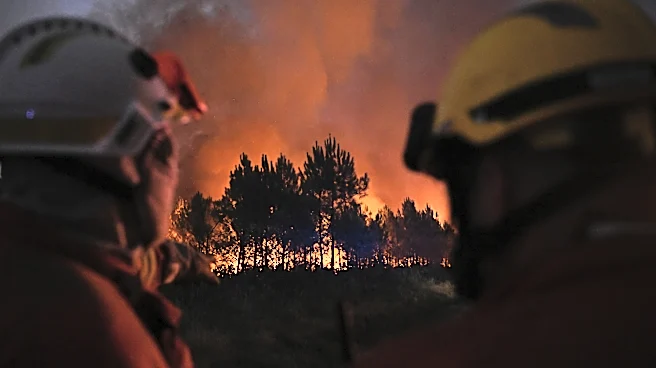
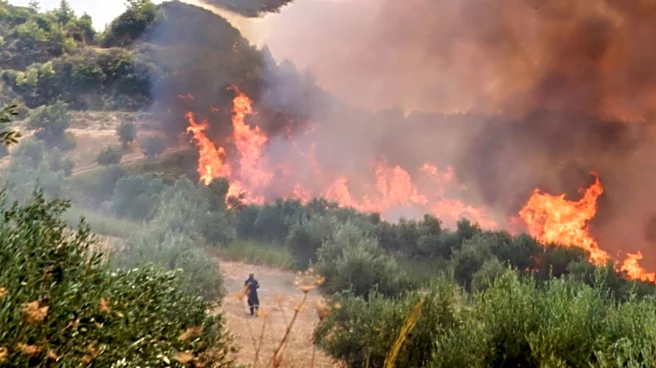
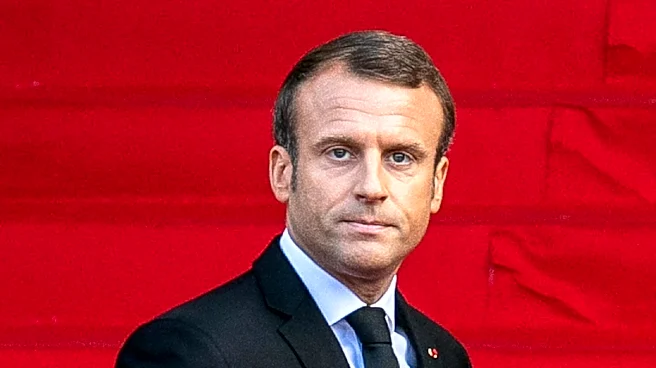
In southwestern France, wildfires have forced the evacuation of nearly 4,000 people from areas around Lacanau on the Atlantic coast. French President Emmanuel Macron described the situation as the most severe since World War II. The fires have burned
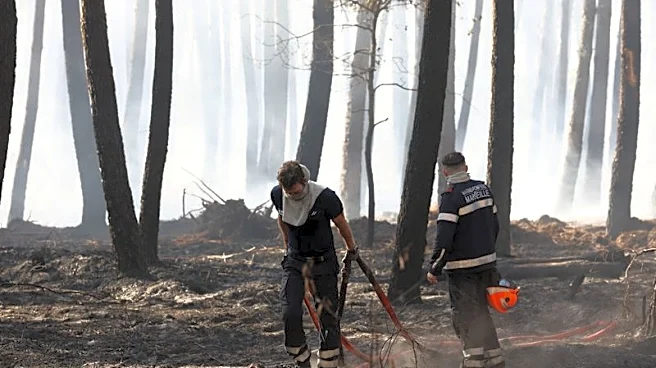
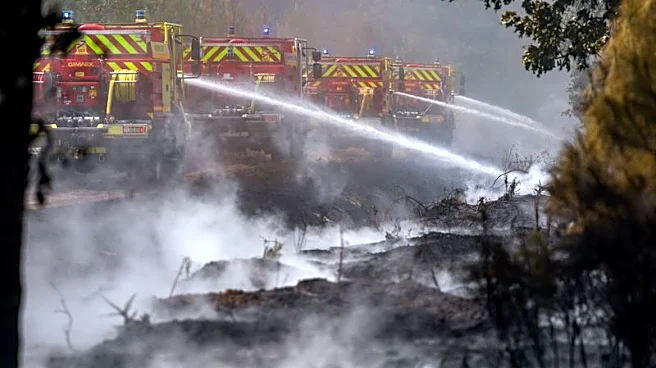
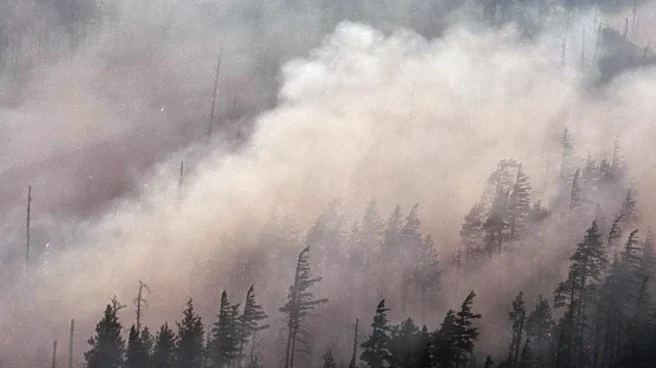
approximately 42,000 hectares and destroyed 240 homes in the Gironde region. The blazes, fueled by extreme heat, have also led to significant air quality issues, with smoke and ash affecting nearby areas. Firefighters continue to battle the flames, with concerns about potential flare-ups due to smoldering vegetation and rising temperatures.
Why It's Important?
The wildfires in France highlight the increasing frequency and intensity of such events, likely exacerbated by climate change. The evacuations and destruction of homes underscore the immediate human impact, while the broader environmental damage affects biodiversity and local economies. The situation also raises questions about preparedness and response strategies in the face of escalating climate-related disasters. The fires' impact on air quality poses health risks, emphasizing the need for comprehensive environmental and public health policies.
What's Next?
Authorities are monitoring the situation closely, with ongoing firefighting efforts aimed at containing the blazes. The French government may need to implement additional measures to support affected communities and address the long-term environmental impact. As temperatures are expected to rise, there is a risk of further outbreaks, necessitating continued vigilance and resource allocation. The situation may prompt discussions on enhancing fire prevention and response strategies at both national and international levels.