





What's Happening?
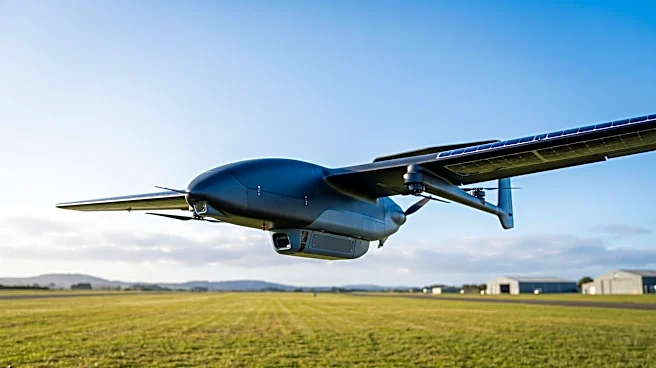
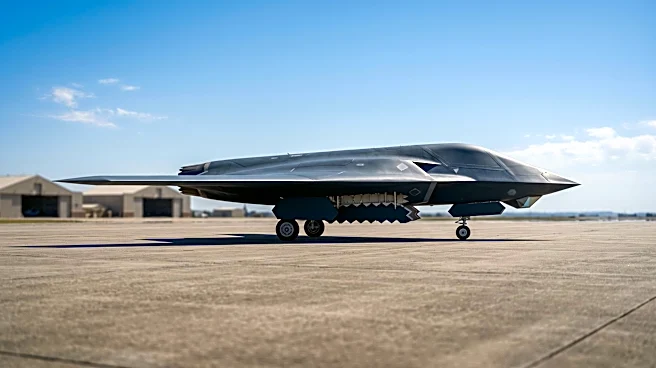
China has released new footage of its GJ-11 stealth combat drone, also known as Attack-11 or Xuanlong (Dark Dragon), providing a detailed look at its advanced design and operational features. The state broadcaster CCTV showcased the drone's large internal
weapon bay with serrated edges, designed to maintain stealth characteristics while housing significant munitions. The footage also highlighted the GJ-11's shielded jet nozzle, low-visibility coating, and a faceted optical window beneath its nose, similar to the J-20 stealth fighter's electro-optical targeting system. The GJ-11, which is the air force's first stealth combat and reconnaissance unmanned aerial vehicle, was first unveiled in 2019 and entered operational service no later than 2025. The report emphasized the drone's high level of autonomy and its ability to coordinate operations with other drones and manned aircraft, serving as forward reconnaissance, decoys, or airborne weapon platforms.
Why It's Important?
The unveiling of new GJ-11 footage underscores China's significant advancements in unmanned aerial vehicle (UAV) technology and its strategic implications for modern warfare. The drone's stealth capabilities, large internal weapon bay, and autonomous operational capacity suggest a shift towards more sophisticated and integrated air combat systems. Its ability to coordinate with manned aircraft and other drones could enhance reconnaissance, target identification, and strike capabilities, potentially altering the dynamics of air defense and offensive operations. This development is particularly important in the context of global military modernization, as it showcases China's growing technological prowess and its commitment to developing advanced military platforms. The GJ-11's role as a potential 'eye' for crewed fighter jets and its function as a decoy or weapon platform indicate a future where manned and unmanned systems operate in highly integrated and autonomous environments, posing new challenges for adversaries.
What's Next?
The GJ-11 is expected to continue undergoing testing and integration into China's air force operations. The report mentioned a live-fire test where the drone successfully engaged a target despite initial difficulties due to cloud cover, indicating ongoing refinement of its targeting and operational capabilities. The development of a carrier-based variant, the GJ-21, which has already conducted take-off and landing operations aboard the Type 076 amphibious assault ship 'Sichuan,' suggests a future expansion of its deployment to naval forces. Further advancements are likely to focus on enhancing its autonomy, improving its ability to operate in diverse environmental conditions, and integrating it more seamlessly with other air assets. The continued development and deployment of such advanced drones will likely influence military doctrines and procurement strategies globally, as other nations seek to counter or emulate these capabilities.
Beyond the Headlines
The emergence of advanced stealth combat drones like the GJ-11 raises profound questions about the future of air warfare and the ethical considerations surrounding autonomous weapons systems. The increasing autonomy of these drones, capable of acting as reconnaissance units, decoys, or even launching guided munitions under human direction, blurs the lines between human and machine decision-making in combat. This technological leap could lead to faster, more efficient, and potentially less risky operations for the deploying force, but it also introduces complexities regarding accountability, target discrimination, and the potential for unintended escalation. The development of such platforms by major global powers like China will undoubtedly fuel an arms race in AI-powered military technology, prompting international discussions on regulations, arms control, and the very nature of future conflicts.