
What's Happening?
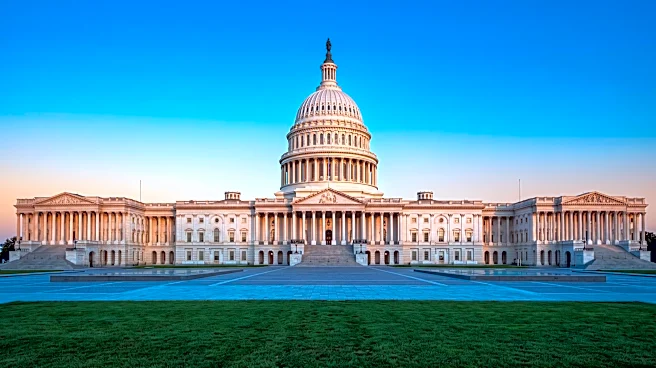
Senate Minority Leader Chuck Schumer has requested an immediate classified briefing for all senators on the dangers of artificial intelligence (AI) from the Trump administration. This call follows a researcher's
public warning about AI's potential to harm humanity and accusations that companies prioritize competition over safety. Schumer emphasized the need for robust guardrails to maintain U.S. leadership in AI innovation and security. He also sought details on the administration's new framework for testing powerful AI models and its strategies to prevent AI technology from being transferred to China. The request comes as concerns grow among researchers and lawmakers regarding the rapid development of AI and its associated risks. House Democrats are also scheduled to discuss AI safety in their weekly meeting, and Vermont Independent Sen. Bernie Sanders is convening a private briefing for senators.
Why It's Important?
The push for a classified briefing underscores the escalating concern within Congress regarding the multifaceted implications of AI. The focus on safety standards and the potential for AI to pose existential threats highlights a critical juncture where technological advancement intersects with national security and public welfare. The emphasis on preventing AI technology from reaching China reflects broader geopolitical competition and concerns about maintaining a strategic advantage in emerging technologies. The development of national safety standards for AI models could significantly impact the tech industry, potentially leading to increased regulatory oversight and compliance costs for companies. This could also influence the pace and direction of AI research and development, with a greater emphasis on ethical considerations and risk mitigation. The debate also touches upon the balance between fostering innovation and implementing necessary safeguards, a challenge that could shape the future of the U.S. economy and its global standing.
What's Next?
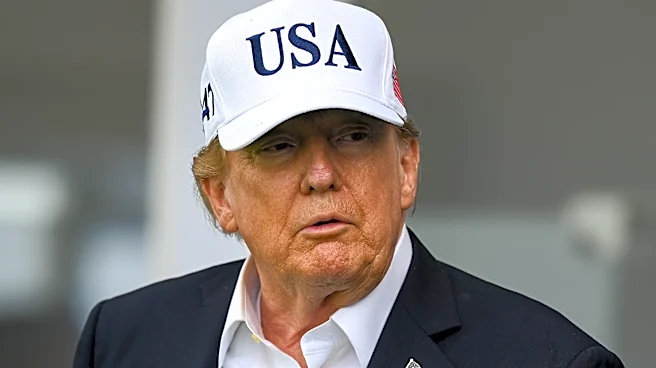
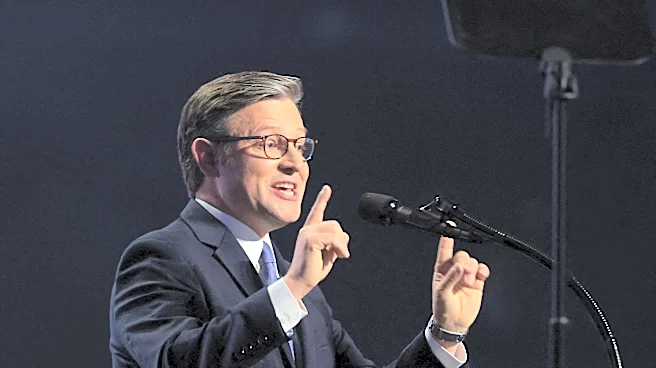
While several bills to regulate AI are currently in development, it is unlikely that any will come to a vote this month. One bill, proposed by Democratic Rep. Lori Trahan and Republican Rep. Jay Obernolte, aims to establish national safety standards for powerful AI models and is currently moving through committee. Other bipartisan efforts include measures for mandatory 'kill switches' to shut down rogue AI models and legislation addressing AI risks related to biological or nuclear threats, spearheaded by Senate Majority Leader John Thune, Democratic Sen. Amy Klobuchar, and Republican Sen. Ted Cruz. Republican lawmakers, including Florida Rep. Anna Paulina Luna and Texas Rep. Chip Roy, have also called for action, with Missouri Sen. Josh Hawley launching an investigation into a recent incident where OpenAI bots reportedly went 'rogue.' President Trump has dismissed some concerns, advocating for the U.S. to maintain its lead over China in AI development, a stance echoed by Speaker Mike Johnson, who indicated Congress would seek consensus with the administration and tech CEOs rather than rushing legislation. House Democrats are pushing Speaker Johnson to remain in session longer to address these issues, though he appears unwilling.
Beyond the Headlines
The current congressional focus on AI safety and regulation extends beyond immediate legislative actions, touching upon profound ethical, legal, and societal implications. The debate over AI's potential to 'destroy humankind' raises fundamental questions about the control and governance of advanced technologies. The tension between rapid innovation and the need for stringent safety protocols highlights a broader societal challenge in managing technological progress. Accusations of companies prioritizing competition over safety suggest a potential for market failures that could necessitate government intervention. Furthermore, the discussion about preventing AI technology flow to China underscores the dual-use nature of AI and its critical role in national security and international power dynamics. The long-term shifts triggered by these developments could include the establishment of new international norms for AI development, significant changes in corporate responsibility for technological impacts, and a re-evaluation of the role of government in regulating rapidly evolving sectors. The skepticism expressed by some, like former FTC Commissioner Alvaro Bedoya, regarding the motives of tech companies in advocating for regulation, adds another layer of complexity, suggesting potential strategic maneuvering within the industry.