




What's Happening?
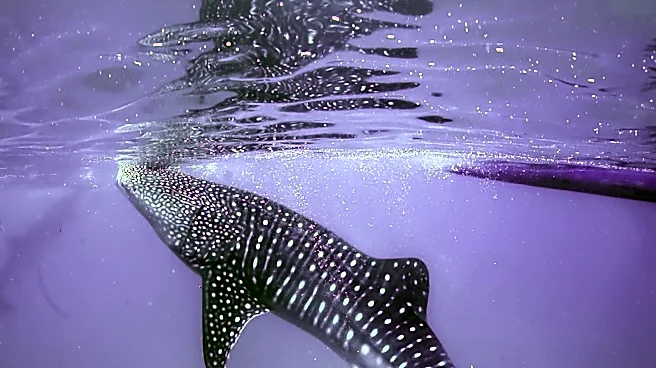
Conservationists are awaiting a final decision from Jakarta regarding a proposed marine protected area (MPA) in Indonesia's Saleh Bay, aimed at protecting whale sharks. The West Nusa Tenggara provincial government and local communities have already endorsed
the MPA, which would encompass 90% of known whale shark hotspots in the bay. This initiative is crucial as the global whale shark population is estimated at 119,000-238,000 individuals, with Indo-Pacific whale sharks experiencing a 63% decline in the last 75 years and Atlantic whale sharks a 30% drop. Experts attribute these declines to targeted fishing, bycatch, and vessel strikes. The Saleh Bay is particularly significant as it serves as a migratory route, feeding ground, and a potential nursery for juvenile whale sharks, with recent sightings of newborns suggesting it could be the first documented whale shark pupping ground globally. The MPA would extend an existing protected area to cover over half of the bay's total area, safeguarding critical habitats and movement corridors.
Why It's Important?
The establishment of this marine protected area is vital for the long-term survival of whale sharks, a species classified as endangered by the IUCN. The significant decline in whale shark populations globally underscores the urgency of such conservation efforts. Protecting Saleh Bay, which shows evidence of being a crucial habitat for juvenile and potentially newborn whale sharks, could have a profound impact on the species' recovery worldwide. The initiative also highlights a successful model of collaboration between conservation organizations, local governments, and fishing communities. By involving local fishers in conservation efforts and training them as ecotourism guides, the project not only protects marine life but also provides alternative livelihoods and economic benefits to the community. This integrated approach demonstrates how conservation can be aligned with local economic development, fostering a sense of ownership and responsibility among those directly impacted by the marine environment.
What's Next?
The next critical step is the final approval from Indonesia's Ministry of Marine Affairs and Fisheries for the extended marine protected area. If approved, the formal recognition of the MPA is anticipated in 2027. Following this, the implementation of the draft management plan, which has already been discussed with stakeholders, will commence. This plan emphasizes a holistic approach, considering the needs of fishing communities, the wider ecosystem, and other tourist activities like diving. Continued collaboration with fishing communities will be essential to leverage their local knowledge and ensure their ongoing support for whale shark conservation, particularly in identifying vulnerable young sharks and preventing harmful interventions. The success of this MPA could serve as a blueprint for other regions facing similar conservation challenges.
Beyond the Headlines
The Saleh Bay whale shark conservation project offers a compelling example of how local engagement can transform perceived conflicts into symbiotic relationships. Initially, fishers viewed whale sharks as a threat due to their impact on schooling fish and potential damage to nets. However, through education and the development of ecotourism, these same fishers have become active participants and beneficiaries of conservation. This shift underscores the ethical imperative of involving local communities in conservation strategies, recognizing their traditional knowledge and economic needs. The potential discovery of Saleh Bay as a whale shark pupping ground also has profound scientific implications, offering unprecedented opportunities to study the early life stages of this elusive species. Such findings could reshape global understanding of whale shark biology and inform future conservation strategies on a broader scale, highlighting the interconnectedness of local actions and global ecological health.