




What's Happening?
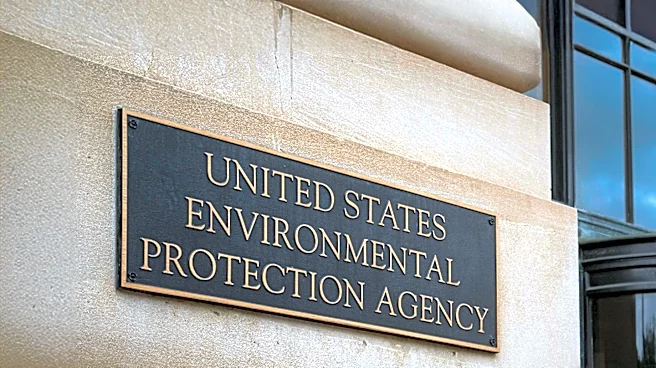
Sixteen environmental and public health organizations have filed a legal petition with the U.S. Environmental Protection Agency (EPA), urging new regulations to address nitrate contamination in drinking water. The groups are advocating for a reduction
in the Maximum Contaminant Level (MCL) for nitrate from the current 10 mg/L to 1 mg/L, and setting the Maximum Contaminant Level Goal (MCLG) at 0 mg/L. This move is based on scientific research indicating that current nitrate levels pose a significant public health threat, including increased risks for various cancers. The petition highlights that 3,205 community water systems, serving approximately 119.7 million people, recorded at least one nitrate sample at or above 1 mg/L between 2021 and 2023. The groups attribute nitrate pollution to excessive synthetic fertilizer use, over-application of animal waste from concentrated animal feeding operations (CAFOs), inadequately treated sewage, industrial discharges, and failing septic systems. The EPA has stated it will review the petition but noted its most recent review in July 2024 found no need to revise the MCL.
Why It's Important?
This petition underscores a growing concern over water quality and public health in the U.S., particularly in agricultural states. If the EPA adopts the proposed stricter standards, it could significantly impact agricultural practices, water treatment facilities, and public health outcomes nationwide. The current MCL for nitrate, established in the 1970s and finalized in 1991, primarily aimed to prevent 'blue baby syndrome.' However, more recent research links even low levels of nitrate contamination to colon, rectal, ovarian, bladder, and kidney cancers, as well as neural tube defects and low birth weights. A lowered MCL would necessitate substantial investments in water treatment infrastructure and could lead to new regulations on agricultural runoff, affecting farmers and the broader agricultural industry. The petitioners argue that the health benefits of a lower MCL, estimated at $364.1 billion over 50 years, far outweigh the projected compliance costs of $94.5 billion, yielding a net benefit of approximately $269.7 billion.
What's Next?
The EPA is legally required to respond to the petition, which could initiate further legal actions. Should the EPA decide to revise the MCL, it would trigger a lengthy rulemaking process involving scientific review, public comment periods, and potentially significant changes for water utilities and agricultural operations. States like Iowa, which already face high levels of nitrate in waterways and rising cancer rates, would be particularly affected. The petition also calls for the EPA to implement new measures to address the sources of nitrate pollution, such as promoting cover cropping, wetlands protection, riparian buffers, and crop diversification. Financial support from the federal government to help utilities comply with a lowered standard is also suggested. The outcome of this petition could set a precedent for how agricultural pollution is regulated and managed across the U.S., influencing both environmental policy and public health initiatives.
Beyond the Headlines
The debate over nitrate pollution highlights a fundamental tension between agricultural productivity and environmental protection. The petition's emphasis on the 'over-application' of animal waste from CAFOs and synthetic fertilizers points to the broader ecological footprint of industrial agriculture. While Denmark is exploring solutions like converting livestock waste into renewable natural gas, critics argue such approaches might inadvertently support factory farming rather than addressing its root causes. In the U.S., the issue extends beyond public water systems, as private well users are also at risk, often exceeding current nitrate limits without regulatory oversight. This situation raises ethical questions about the responsibility of industries for environmental degradation and the government's role in safeguarding public health against long-term, insidious contaminants. The potential for a carbon tax on agriculture, as seen in Denmark, could also become a future consideration in the U.S. to incentivize more sustainable farming practices.