


What's Happening?
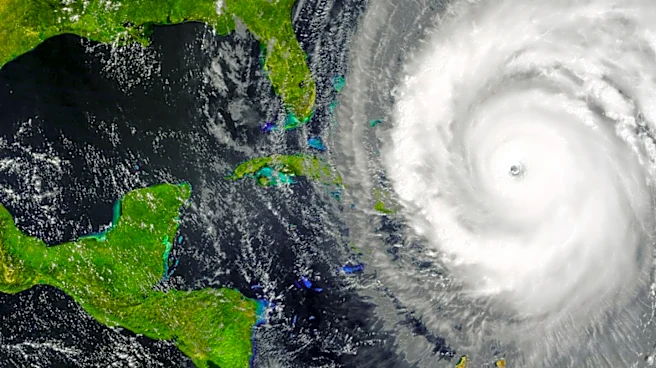
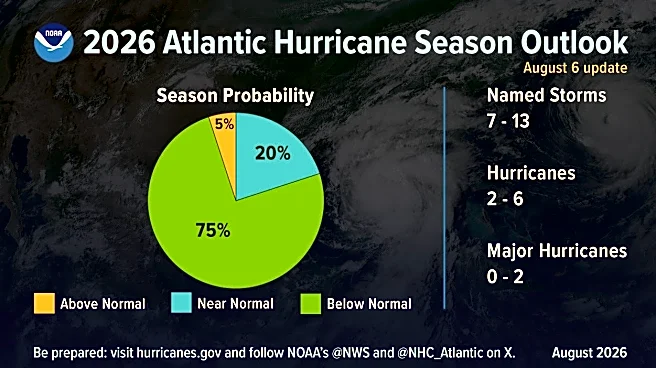
The National Hurricane Center has identified a new area in the Atlantic Ocean for potential tropical development. This area, located off the coast of Africa, is expected to move westward next week. The National Oceanic and Atmospheric Administration has updated
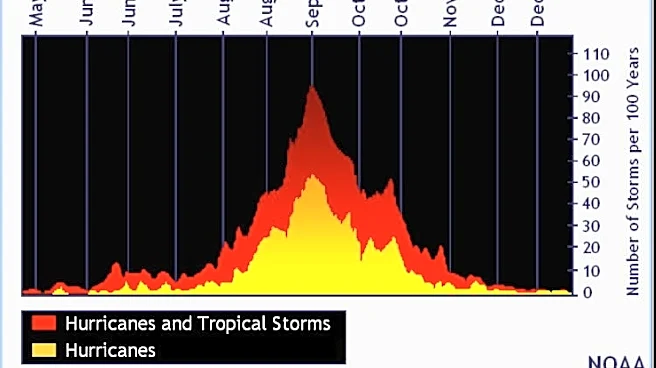
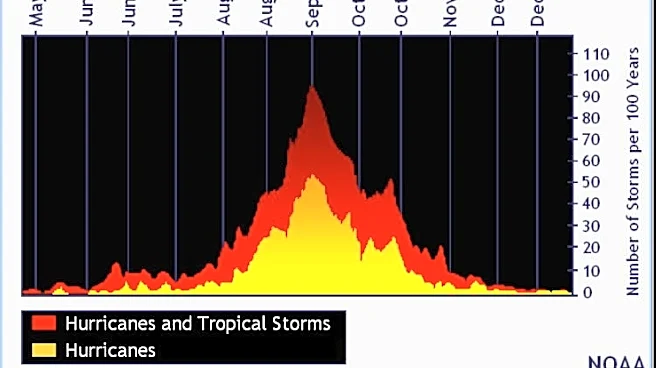
its 2026 Atlantic hurricane outlook, predicting 7 to 13 named storms this season, with 2 to 6 hurricanes. The strengthening El Niño climate pattern is expected to suppress tropical development in the Atlantic, creating atmospheric conditions unfavorable for storm formation. Despite low odds of development, the situation is being closely monitored by meteorologists.
Why It's Important?
The identification of new tropical development areas is crucial for preparing and mitigating potential impacts of hurricanes. The strengthening El Niño pattern could significantly influence the 2026 hurricane season, potentially reducing the number and intensity of storms. This has implications for coastal communities and industries reliant on weather conditions, such as agriculture and tourism. Understanding these patterns helps in planning and resource allocation to minimize damage and ensure public safety. The updated hurricane outlook provides valuable information for stakeholders to make informed decisions regarding preparedness and response strategies.
What's Next?
Meteorologists will continue to monitor the identified area for signs of development, assessing factors such as Saharan dust, upper-level winds, and water temperatures that could influence storm formation. The progress of the El Niño pattern will also be closely watched, as it plays a significant role in shaping the hurricane season. Government agencies and local authorities may issue advisories and updates to keep the public informed and prepared for any potential developments. The situation underscores the importance of ongoing research and monitoring to enhance predictive capabilities and improve response strategies.