



What's Happening?
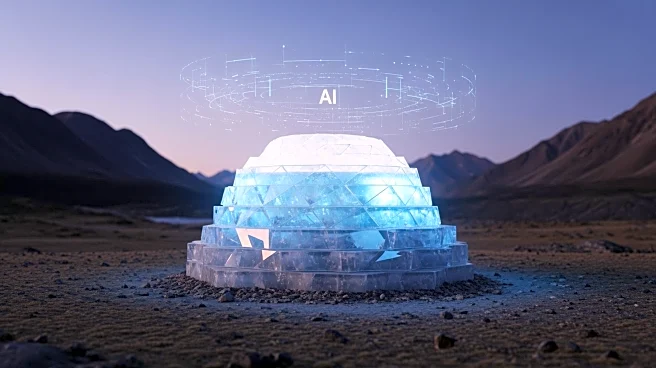
Brett Storoe, a Naperville native and Neuqua Valley High School alum, is utilizing artificial intelligence to create ice stupas in Chile. These man-made glaciers are designed to store water during the winter and release it in the summer, addressing water scarcity
issues. Storoe, in collaboration with the Milwaukee School of Engineering and Chilean startup Nilus, developed an algorithm to determine optimal locations for these ice formations. The project involves channeling water from higher altitudes through underground pipes, which is then sprayed into subzero air to form the stupas. Storoe's work focuses on growth analysis and volume tracking of these structures, aiming to improve efficiency and scalability.
Why It's Important?
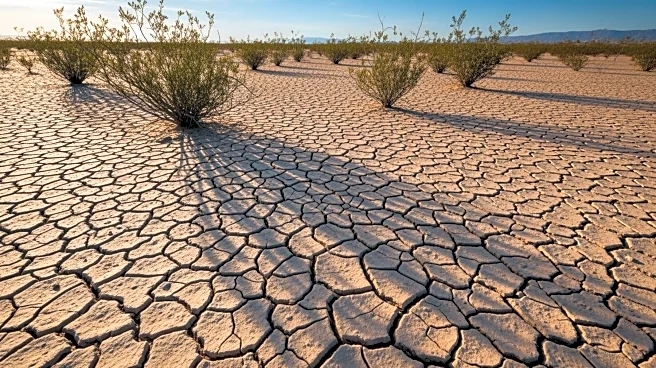
The development of ice stupas using AI technology represents a significant advancement in addressing water scarcity, particularly in arid regions like Chile. By providing a sustainable water source during dry periods, this innovation could have profound implications for agriculture and local communities. The project also highlights the potential of AI in environmental engineering, offering a model for similar initiatives worldwide. The collaboration between educational institutions and startups exemplifies how interdisciplinary efforts can lead to practical solutions for global challenges.
What's Next?
Storoe plans to continue his work with Nilus as part of his senior capstone project, focusing on predicting the volume of ice stupas at scale. This involves transitioning from 2D image analysis to a comprehensive 3D understanding of the structures. The success of this project could inspire further AI-driven environmental solutions and encourage more students to engage in complex, impactful projects. The ongoing collaboration may also lead to the expansion of ice stupa technology to other regions facing similar water scarcity issues.