



What's Happening?
Florida's coastal communities are experiencing 'post-disaster gentrification' following recent hurricanes, where wealthier residents are replacing working-class and middle-class populations in beachside neighborhoods. This phenomenon is driven by the
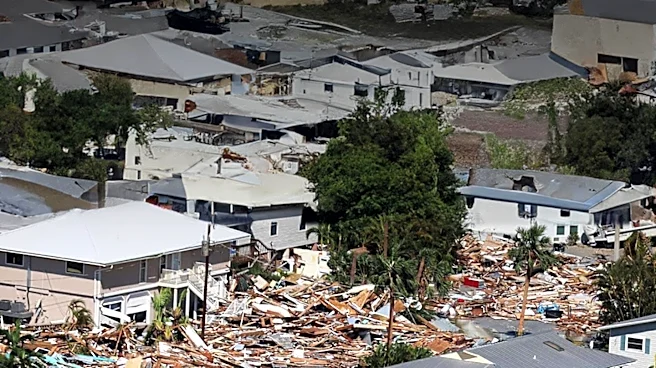
soaring costs of rebuilding and homeowners' insurance, making it difficult for original residents to return. For example, in Mexico Beach, hit by Hurricane Michael in 2018, many former residents could not afford to rebuild under stricter codes or faced challenges with insurance, leading to their modest homes being replaced by multi-million dollar investment properties. Similarly, in Cape Coral after Hurricane Ian in 2022, residents like Bridget Fown struggled to find affordable rehousing options, ultimately leading to their displacement. Research from the U.S. Census Bureau indicates that Black and Latino households, renters, and lower-income individuals are less likely to return to communities after natural disasters due to factors such as lack of insurance, limited assistance, and unaffordable housing. The median home price in Bay County, which includes Mexico Beach, jumped significantly after Hurricane Michael, and the demographic makeup shifted towards wealthier, non-Hispanic white residents, with a decline in young adults and Black residents.
Why It's Important?
This trend of post-disaster gentrification has significant implications for social equity and community resilience in the U.S. It exacerbates existing inequalities, as marginalized communities, particularly people of color and those with lower incomes, are disproportionately affected. These groups often live in areas more prone to hazards like flooding and face greater barriers to recovery, including insufficient insurance coverage and limited access to aid. The displacement of long-term residents erodes the social fabric and cultural identity of these communities, transforming them from diverse, working-class areas into more affluent, often transient, investment zones. This shift also impacts local economies, as small, locally owned businesses are replaced by corporate entities catering to a wealthier demographic. The increased cost of living and housing, coupled with stricter rebuilding codes, creates a cycle where only those with substantial financial resources can afford to return or invest, effectively pricing out original inhabitants and altering the demographic and economic landscape of disaster-stricken regions.
What's Next?
The ongoing threat of more frequent and intense storms due to climate change suggests that post-disaster gentrification will likely continue to be a challenge for U.S. coastal communities. Local officials face a dilemma between implementing stricter building codes for future resilience and ensuring affordable housing for displaced residents. The scarcity of materials and workers post-disaster further inflates rebuilding costs, complicating recovery efforts for those with limited means. Addressing this issue will require comprehensive policy solutions that prioritize equitable recovery, such as improved access to affordable insurance, targeted financial assistance for low-income households, and housing programs designed to prevent displacement. Community leaders and policymakers may need to explore mechanisms to protect existing residents and ensure that revitalization efforts benefit all segments of the population, rather than just wealthier newcomers. Without such interventions, more communities risk losing their original character and residents in the wake of natural disasters.
Beyond the Headlines
Beyond the immediate economic and social impacts, post-disaster gentrification raises deeper questions about environmental justice and the long-term sustainability of coastal communities. The phenomenon highlights how climate change disproportionately affects vulnerable populations, not only through direct exposure to hazards but also through the subsequent socio-economic restructuring of their neighborhoods. The transformation of areas from 'fishing villages' to 'investment places' signifies a loss of local heritage and community identity, replaced by a more homogenized, tourism- or investment-driven economy. This trend also underscores the ethical challenge of balancing disaster recovery with equitable development. The desire for more resilient infrastructure, while necessary, can inadvertently become a tool for displacement if not coupled with robust social protections. The shift in demographics and economic structure can also lead to a loss of institutional memory and local knowledge about living with environmental risks, potentially making these communities less resilient in the long run, despite physically stronger buildings.