





What's Happening?
NASA scientists have observed an unprecedented solar radio burst that lasted for 19 days, setting a new record for this type of solar activity. Typically, solar radio bursts fade within hours or a few days, but this event, detected in August 2025, persisted
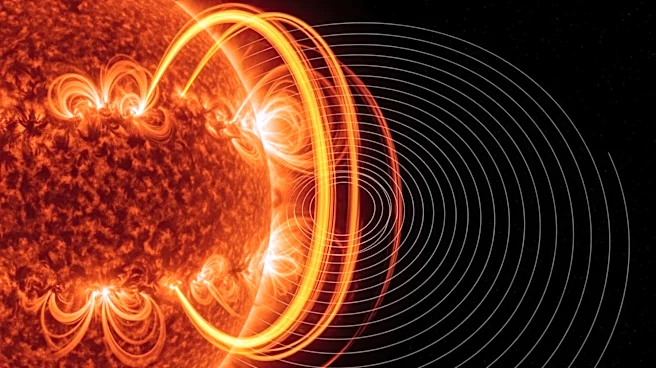
far longer than expected. The burst was classified as a Type IV radio burst, which is produced by energetic electrons trapped in the Sun's magnetic fields. Although the radio waves themselves are not harmful to Earth, the magnetic conditions associated with such bursts can lead to solar eruptions that pose risks to satellites and space-based technologies. To study the event, researchers utilized data from multiple spacecraft, including NASA's STEREO, Parker Solar Probe, and Wind spacecraft, as well as the ESA and NASA's Solar Orbiter mission.
Why It's Important?
This discovery is significant for the field of space weather research, as it provides new insights into the behavior of solar radio bursts and their potential impact on space-based technologies. Understanding these prolonged solar events is crucial for improving space weather forecasting, which can help protect satellites and spacecraft from harmful solar activity. The research also highlights the importance of international collaboration in space exploration, as data from various missions were combined to analyze the event. By enhancing our knowledge of solar phenomena, scientists can develop better strategies to mitigate the risks posed by solar activity to technological infrastructure in space.