







What's Happening?
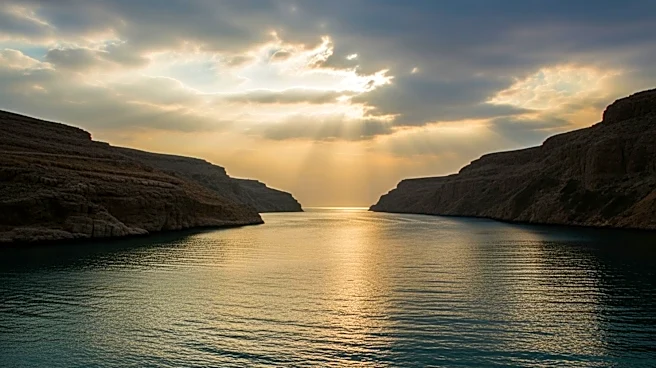
Iran has sent a revised ceasefire proposal to the United States through Pakistani mediators, as tensions continue over the control of the Strait of Hormuz. Iran's Supreme Leader, Mojtaba Khamenei, has reiterated the country's intention to maintain control over the strait,
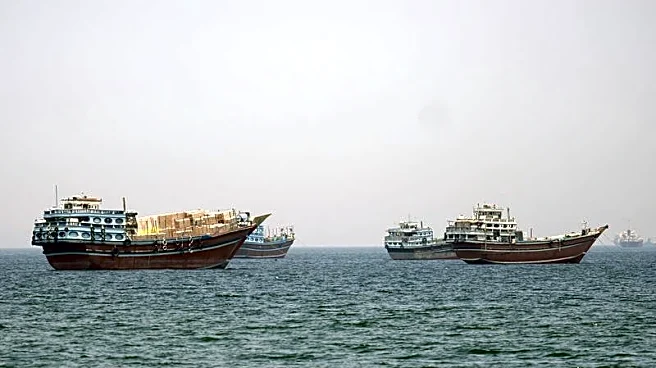
a crucial passage for global oil supply. This move comes amid U.S. President Trump's demands for Iran to dismantle its nuclear and missile capabilities. The U.S. Central Command has prepared plans for potential military action against Iran, including strikes on infrastructure and operations to secure the strait for commercial shipping. Iran has also begun charging transit fees for ships passing through the strait, a move condemned by Gulf states as piracy.
Why It's Important?
The control of the Strait of Hormuz is critical as it is a key route for about one-fifth of the world's oil supply. Iran's actions to charge transit fees and assert control over the strait could significantly impact global oil markets and economic stability. The U.S. response, including potential military action, could escalate tensions further, affecting international relations and regional security. The situation also highlights the ongoing geopolitical struggle between Iran and the U.S., with implications for global energy security and diplomatic relations in the Gulf region.
What's Next?
The U.S. is considering military options to pressure Iran back to the negotiating table, with plans for strikes and operations to secure the Strait of Hormuz. The international community, particularly Gulf states, will likely continue to monitor the situation closely, as any escalation could have widespread economic and security implications. The outcome of these negotiations and potential military actions will be crucial in determining the future stability of the region and the global oil market.