



What's Happening?
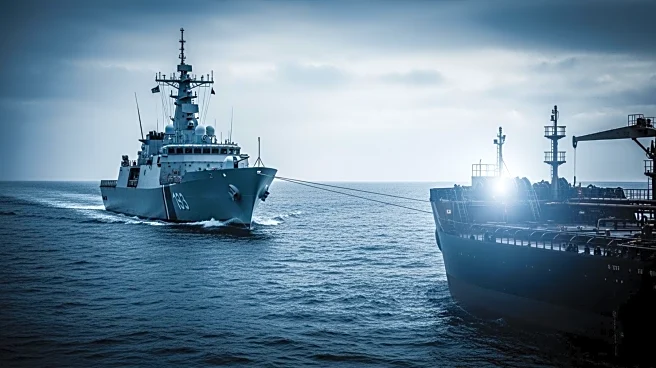
Denmark has confirmed its support for a U.S. operation that intercepted an oil tanker in the east Atlantic, which was in violation of U.S. sanctions. This operation was part of a broader U.S. effort to enforce a blockade in the waters of Venezuela, targeting
vessels involved in sanctioned activities. The Danish official, speaking anonymously, did not disclose the specifics of the support provided. This development occurs amidst ongoing tensions between Denmark and the U.S., particularly regarding President Trump's interest in acquiring Greenland, a Danish territory. High-level meetings are scheduled in Washington to discuss the matter, involving U.S. Vice President JD Vance, Secretary of State Marco Rubio, and Danish Foreign Minister Lars Løkke Rasmussen.
Why It's Important?
The interception of the oil tanker underscores the U.S.'s commitment to enforcing sanctions against Venezuela, reflecting broader geopolitical strategies in the region. Denmark's involvement highlights the complexities of international alliances, especially within NATO, where member countries may have differing priorities and interests. The situation also brings to light the strategic importance of Greenland, which has been a point of contention between the U.S. and Denmark. The potential use of military force by the U.S. to acquire Greenland, as suggested by President Trump, could strain diplomatic relations and impact NATO's cohesion.
What's Next?
The upcoming meetings in Washington could determine the future of U.S.-Danish relations, particularly concerning Greenland. The discussions may address the strategic importance of the Arctic region and the implications of U.S. military interests there. Additionally, the outcome of these talks could influence future U.S. sanctions enforcement strategies and international cooperation in such operations.