



What's Happening?
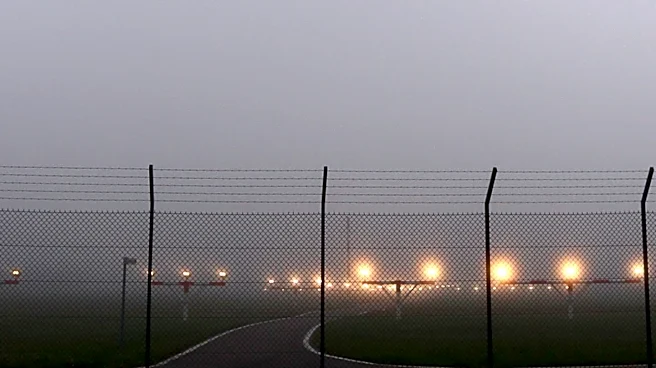
Ireland's new €53 million government jet, the Dassault Falcon 6X, was delivered without the advanced Israeli-made FalconEye vision system. This system, developed by Elbit Systems, is designed to assist pilots in landing during fog and other low-visibility
conditions. The decision to exclude FalconEye was reportedly due to the requirement for a direct procurement agreement with Elbit Systems, which the Irish government chose to avoid. The Falcon 6X, primarily used for transporting government officials and medical evacuation missions, can carry up to 14 passengers and is operated from Casement Aerodrome near Dublin. Despite the absence of FalconEye, the Department of Defence maintains that the aircraft's operational capability is not significantly impaired. However, sources indicate that the lack of this system limits the pilots' options in poor weather conditions.
Why It's Important?
The exclusion of the FalconEye system from Ireland's government jet highlights the country's political stance towards Israeli defense technology amidst ongoing tensions related to the conflict in Gaza. This decision reflects Ireland's broader policy to avoid purchasing equipment with Israeli components, a stance that has been part of its foreign policy since 2024. The absence of the vision system could impact the operational flexibility of the aircraft, particularly in adverse weather conditions, potentially affecting the safety and efficiency of government transport. This move also underscores the complexities of international defense procurement, where political considerations can influence technical and operational decisions.
What's Next?
Ireland's decision may prompt further scrutiny of its defense procurement policies, especially concerning the integration of foreign technology. The government might face pressure to reassess its stance if operational challenges arise due to the absence of systems like FalconEye. Additionally, this situation could influence Ireland's future defense acquisitions, potentially leading to increased reliance on non-Israeli technology. The broader implications for Ireland's diplomatic relations with Israel and its position within the European Union regarding defense and foreign policy could also evolve as a result of this decision.
Beyond the Headlines
The decision to exclude the FalconEye system from the government jet may have deeper implications for Ireland's defense strategy and its international relations. It reflects a growing trend of countries reassessing their defense procurement strategies in light of geopolitical considerations. This move could also influence public opinion and political discourse within Ireland, particularly among groups advocating for stronger stances against Israeli policies. The situation highlights the intersection of technology, politics, and ethics in defense procurement, raising questions about the balance between operational needs and political principles.