





What's Happening?
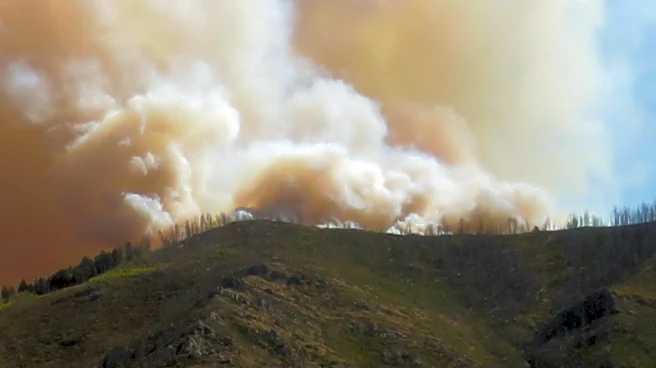
Researchers have developed a new method to track wildfires using acoustic sensors that detect infrasound, a low-frequency rumble inaudible to human ears. A study published in Geophysical Research Letters details how these sensors were deployed near a prescribed
burn in Idaho, successfully mapping the flames' spread by picking up the distinctive low-frequency sound emitted by the fire. This technique proved effective even for relatively weak fires in damp landscapes, which burn less intensely. Jake Anderson, a geophysicist at Boise State University and lead author of the study, noted that this method is encouraging for broader use. Unlike traditional fire spotting methods that require a direct line of sight, acoustic monitoring can operate in conditions with poor visibility, such as those caused by clouds or dense smoke.
Why It's Important?
This acoustic tracking technology represents a significant advancement in wildfire detection and management. Early detection and accurate mapping of fire spread are critical for effective firefighting, allowing for quicker response times and better resource allocation. Traditional methods, including lookout stations, satellites, and airborne platforms, can be limited by visibility issues. Infrasound detection offers a continuous, real-time monitoring capability that is not hampered by smoke or darkness, potentially saving lives and reducing property damage. The ability to track even low-intensity fires in their early stages could prevent them from escalating into larger, more destructive blazes. This innovation could also lead to more efficient use of firefighting resources, as crews can be directed precisely where they are most needed, improving safety for personnel on the ground.
What's Next?
The next phase of research will involve testing this acoustic technology on actual wildfires, which presents greater challenges than controlled burns due to safety and accessibility concerns. Researchers aim to develop deployable tech that firefighters can install in the field. However, potential limitations, such as interference from high winds which also produce infrasound, need to be addressed. While the primary focus is on tracking, some companies are exploring the use of infrasound for fire suppression, particularly for small indoor fires. However, experts like Anderson believe it is unlikely that this technology will be effective for extinguishing large outdoor wildfires due to the spherical spread and rapid power loss of sound waves in unconfined environments. Continued research will focus on refining the sensors and algorithms to differentiate fire-generated infrasound from other environmental noises.
Beyond the Headlines
The development of infrasound tracking for wildfires highlights a broader trend in leveraging advanced sensor technology and data analytics for environmental monitoring and disaster response. This innovation moves beyond conventional visual detection, tapping into the subtle acoustic signatures of natural phenomena. It underscores the potential for interdisciplinary scientific approaches to address complex challenges like climate change-driven wildfires. Furthermore, the concept of 'listening' to the environment for early warning signs could be extended to other natural hazards, such as volcanic activity or landslides. This shift towards passive, non-visual detection methods could revolutionize how we understand and interact with dynamic environmental processes, offering new avenues for protection and mitigation in an increasingly unpredictable world. The ethical implications of widespread environmental sensing, including data privacy and the potential for misuse, will also become increasingly relevant as these technologies advance.