



What's Happening?
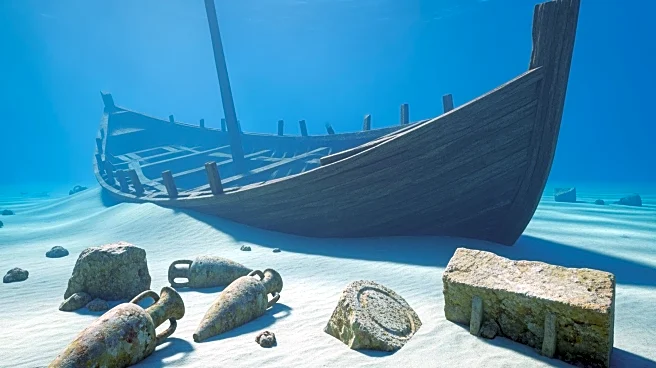
Italian authorities, during a routine patrol in the Ionian Sea, have discovered a late Roman merchant shipwreck. The ship, found off the coast of Apulia, Italy, dates back to the late Imperial era, approximately between 284 A.D. and 641 A.D. The Guardia
di Finanza, Italy's financial police force, made the discovery in June 2025 but kept it confidential until now to prevent looting and preserve the archaeological site. The ship was carrying amphorae, which were used to transport garum, a fermented fish sauce popular in ancient Rome. The discovery was made using advanced onboard equipment that detected an anomaly on the seabed. The site is under constant monitoring by the Naval Operations Section of the Guardia di Finanza in Gallipoli, and officials are currently surveying and documenting the wreck using advanced investigative methodologies.
Why It's Important?
The discovery of the Roman shipwreck is significant as it provides valuable insights into ancient maritime trade and the economic history of the Mediterranean region. The ship's cargo of amphorae, used for transporting garum, highlights the trade networks and culinary practices of the Roman Empire. This find adds to a growing list of ancient shipwrecks that have been uncovered in the Mediterranean, offering a deeper understanding of historical trade routes and cultural exchanges. The preservation of such sites is crucial for archaeologists and historians to piece together historical narratives and understand the technological advancements of the time. The confidentiality maintained by the Italian authorities underscores the importance of protecting such sites from looting, ensuring that the information contained within can be studied and preserved for future generations.
What's Next?
Italian officials will continue to survey and document the shipwreck using advanced methodologies. The ongoing monitoring and research efforts aim to uncover more details about the ship's origin, construction, and the broader historical context of its journey. The findings could potentially lead to new exhibitions or publications that further illuminate the history of the Roman Empire's maritime activities. Additionally, the discovery may prompt further exploration in the region, as similar shipwrecks could be located nearby, offering more opportunities for archaeological study and historical discovery.