







What's Happening?
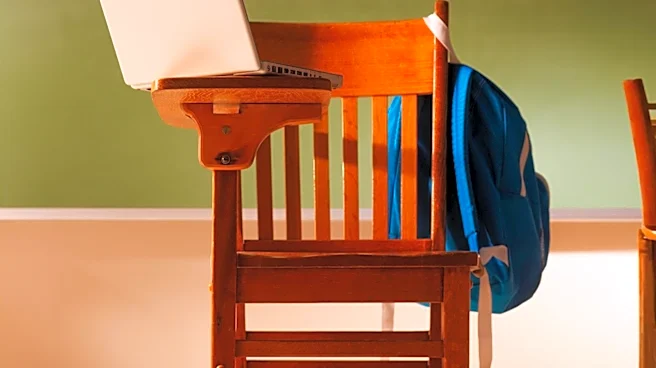
Schools across the United States are reassessing their reliance on technology in classrooms following concerns that excessive screen time may negatively impact student learning and test scores. Institutions like McPherson Middle School in Kansas have
begun limiting the use of school-issued laptops, such as Chromebooks, after observing that students were using them for non-educational activities. This shift comes as studies indicate that frequent in-class computer use correlates with lower math and science performance. Schools in states like North Carolina, Virginia, Maryland, and Michigan are also reconsidering their tech-first policies, opting for more traditional learning methods to improve educational outcomes.
Why It's Important?
The move to reduce technology use in schools highlights a growing recognition of the potential drawbacks of digital learning tools. While technology can enhance education, its misuse or overuse may hinder student engagement and academic performance. This reevaluation is crucial as it addresses the balance between leveraging technology and maintaining effective teaching practices. The shift could lead to improved test scores and better learning experiences for students, as schools focus on integrating technology in ways that genuinely enhance education rather than distract from it.
What's Next?
As schools continue to adjust their technology policies, educators and policymakers will likely monitor the impact on student performance and engagement. This could lead to the development of new guidelines for technology use in classrooms, emphasizing its role as a supplementary tool rather than a primary focus. The ongoing dialogue about technology in education may also influence future investments in educational resources, prioritizing tools and methods that have proven benefits for student learning.