
What's Happening?
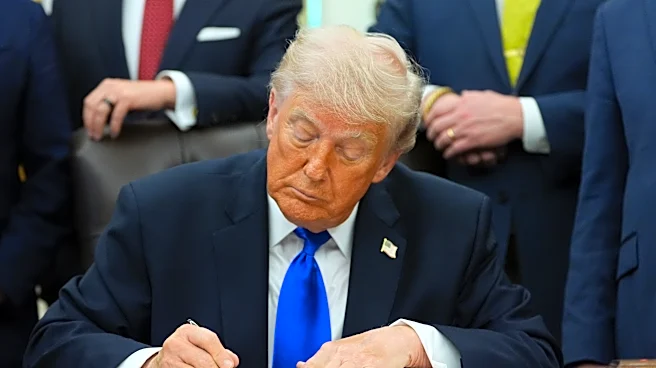
European markets experienced a downturn as President Trump announced plans to increase tariffs on cars and trucks from the European Union to 25%. This announcement led to a 1.6% drop in European automakers'
stocks, with companies like Continental, Mercedes Benz, and Volkswagen seeing significant declines. The tariff threat comes despite a previous Supreme Court ruling that struck down parts of Trump's tariff agenda. Additionally, President Trump unveiled 'Project Freedom', a plan to ensure the safe passage of ships through the Strait of Hormuz, involving military resources. Meanwhile, oil prices saw a slight decrease, with Brent crude and West Texas Intermediate both edging lower.
Why It's Important?
The potential increase in auto tariffs could escalate transatlantic trade tensions, impacting the European automotive industry and broader economic relations between the U.S. and EU. The automotive sector is a significant component of the European economy, and increased tariffs could lead to higher costs for manufacturers and consumers. President Trump's actions in the Middle East, particularly regarding the Strait of Hormuz, highlight ongoing geopolitical tensions that could affect global oil supply and prices. These developments underscore the interconnectedness of global markets and the potential for political decisions to influence economic stability.
What's Next?
The European Commission is considering its response to the proposed tariffs, which could involve retaliatory measures. The situation in the Middle East remains volatile, with potential implications for global oil markets and shipping routes. Investors and businesses will closely monitor these developments, as further escalation could lead to increased market volatility. The automotive industry may need to explore alternative strategies to mitigate the impact of tariffs, such as diversifying supply chains or seeking new markets.