





What's Happening?
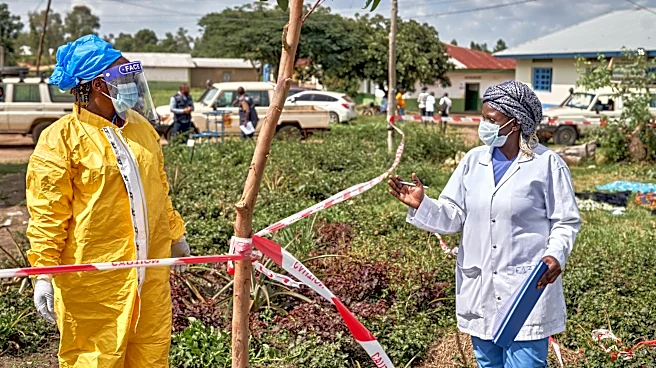
The World Health Organization (WHO) has expressed significant concern over the rapid spread of an Ebola outbreak in the Democratic Republic of Congo (DRC), which has resulted in approximately 131 deaths. The outbreak, caused by the Bundibugyo strain of Ebola,
has been declared an international health emergency. The epicenter of the outbreak is in the northeastern Ituri province, a region plagued by conflict and difficult to access. The virus has spread to neighboring provinces and across borders into Uganda. The WHO is exploring potential vaccine candidates, although none are currently available for the Bundibugyo strain. The outbreak is the 17th in the DRC, a country with a history of Ebola outbreaks, including the deadliest one between 2018 and 2020.
Why It's Important?
The rapid spread of the Ebola virus in the DRC poses a significant public health challenge, not only for the country but also for neighboring regions. The lack of a vaccine for the Bundibugyo strain complicates containment efforts, increasing the risk of further spread. The outbreak's location in a conflict-ridden area further hampers response efforts, as access to affected communities is limited. The international health emergency declaration by the WHO underscores the potential for the outbreak to escalate, necessitating a coordinated global response. The situation highlights the ongoing vulnerability of regions with weak healthcare infrastructure to infectious disease outbreaks.
What's Next?
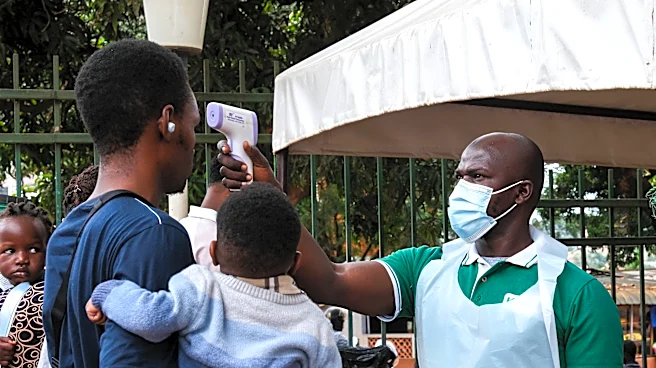
Efforts to contain the outbreak will likely focus on improving access to affected areas and enhancing community awareness to encourage early reporting and treatment of suspected cases. The WHO and other international health organizations may increase support to the DRC to bolster response efforts. The development and deployment of a vaccine for the Bundibugyo strain could become a priority if the outbreak continues to spread. Neighboring countries may implement screening measures to prevent cross-border transmission, and international aid may be mobilized to support the DRC's healthcare system.