



What's Happening?
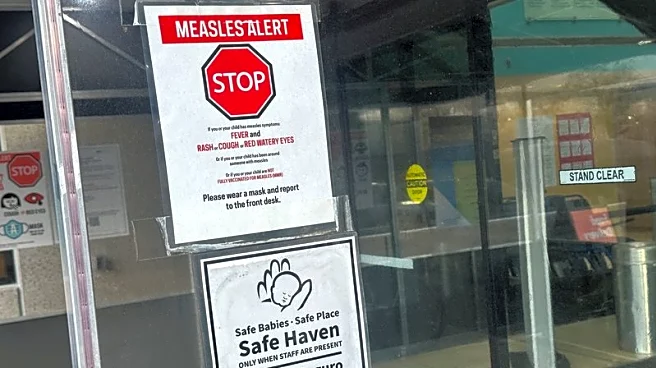
In Minnesota, public health officials and community leaders are grappling with low measles vaccination rates within the state's large Somali community. Despite efforts to combat misinformation linking the measles, mumps, and rubella (MMR) vaccine to autism,
vaccination rates have significantly declined. The myth persists even after four measles outbreaks since 2011. Recent initiatives, such as mobile clinics and a vaccine confidence task force, have shown some progress. However, the state's kindergarten MMR vaccination rate has dropped over six percentage points in the past five years, compared to a two-point drop nationwide. Community leaders emphasize the need for consistent outreach and education to address these challenges.
Why It's Important?
The decline in vaccination rates poses a significant public health risk, as measles is highly contagious and can lead to severe complications, especially in young children. The situation in Minnesota's Somali community highlights the broader issue of vaccine misinformation and its impact on public health. With the U.S. at risk of losing its measles elimination status, addressing these misconceptions is crucial. The efforts to improve vaccination rates are vital not only for the Somali community but also for preventing potential outbreaks that could affect the wider population.
What's Next?
Community leaders and health officials are likely to continue their efforts to increase vaccination rates through education and outreach. This may involve more targeted initiatives, such as engaging trusted community figures and utilizing social media to spread accurate information. The success of these efforts will depend on building trust within the community and addressing the underlying fears and misconceptions about vaccines.