





What's Happening?
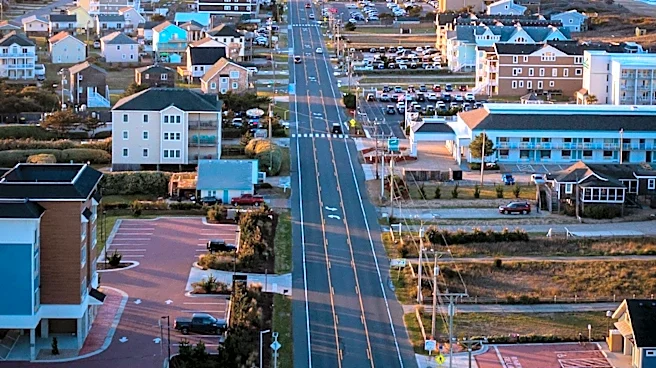
The Outer Banks of North Carolina see a substantial decrease in visitors after Labor Day, transitioning from a bustling tourist hub to a quieter community. This seasonal shift highlights the distinct differences between the peak tourist season and the off-season,
revealing the true nature of the year-round economy and the lives of permanent residents. The article emphasizes that while tourists primarily see attractions and amenities, the local community navigates the underlying systems of housing, labor, and essential services that sustain the area throughout the year. This period allows for a clearer understanding of the challenges and realities faced by those who live and work in the Outer Banks outside of the busy summer months.
Why It's Important?
This seasonal transformation is critical for understanding the economic and social dynamics of tourist-dependent regions like the Outer Banks. The significant drop in visitors after Labor Day directly impacts local businesses, employment rates, and the availability of services. It underscores the vulnerability of economies heavily reliant on tourism and the need for sustainable year-round economic strategies. For residents, the off-season brings a different quality of life, often with fewer job opportunities but also less crowding. This shift also influences infrastructure planning, as resources must be managed to accommodate both peak demand and the quieter periods, affecting everything from public services to housing availability for seasonal workers.
What's Next?
Communities in the Outer Banks will continue to adapt to these seasonal fluctuations, potentially exploring ways to diversify their economy or attract off-season visitors through specialized events or promotions. There may be ongoing discussions about balancing the needs of the tourism industry with the quality of life for permanent residents, particularly concerning housing and employment. Travelers considering visiting during the off-season should be aware of potential closures or reduced hours for certain attractions and services. Local authorities and businesses might also focus on initiatives to support year-round residents and maintain essential services during the quieter months.
Beyond the Headlines
The post-Labor Day emptying of the Outer Banks illustrates a broader phenomenon in many seasonal tourist destinations: the tension between a place's identity as a vacation spot and its reality as a living community. This period offers a unique lens through which to examine the social and environmental impacts of mass tourism. It raises questions about the sustainability of seasonal economies, the challenges of maintaining local culture amidst transient populations, and the often-invisible labor that supports the visitor experience. Understanding this dynamic can lead to more thoughtful tourism practices that benefit both visitors and residents, fostering a more balanced and respectful relationship with these unique coastal environments.