



What's Happening?
The remnants of Typhoon Champi are tracking towards the Bristol Bay region, with impacts expected across Western Alaska. According to Jason Laney, warning coordination meteorologist for the National Weather Service, tropical storms tend to expand in size
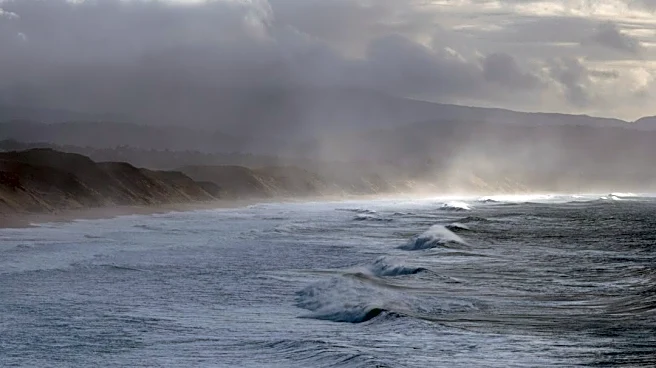
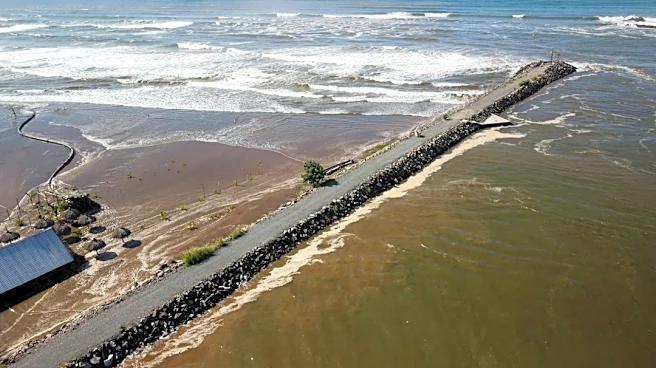
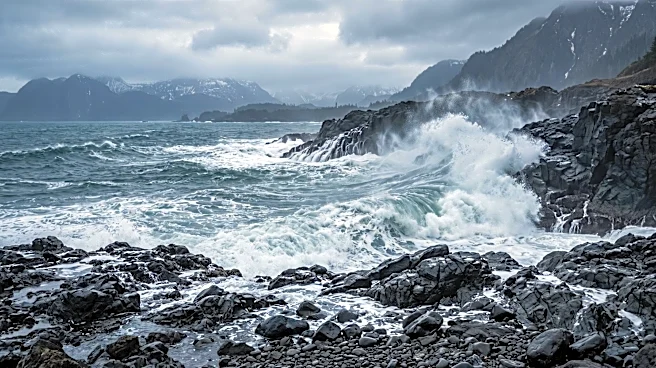
as they move into colder waters, spreading their wind fields over much larger areas. This means communities in the Aleutian Islands and across Western Alaska will experience significant effects. The National Weather Service has issued a briefing indicating that Hooper Bay on the Yukon-Kuskokwim Delta could see water levels rise 2 to 4 feet above normal high tide lines by Thursday afternoon, potentially flooding a road. A coastal flood advisory is in effect from Hooper Bay to Kotlik starting Thursday morning. Farther north, Nome and Kotzebue are anticipating high surf and coastal erosion. Nome is also concerned about heavy rainfall, with approximately 1.5 inches forecasted, which could hinder the drainage of the Nome and Snake rivers due to high water levels in Norton Sound.
Why It's Important?
This weather event is significant for the affected Alaskan communities due to the potential for widespread disruption and hazards. The expanded wind field of ex-Typhoon Champi means a larger geographical area will be impacted, increasing the number of residents and infrastructure at risk. Coastal flooding, particularly in areas like Hooper Bay, can lead to road closures, isolating communities and disrupting essential services. The combination of heavy rainfall and high water levels in coastal areas, as anticipated in Nome, poses a dual threat of inland flooding and impeded river drainage, which can exacerbate damage to property and infrastructure. These recurring severe weather patterns, fueled by phenomena like El Niño, highlight the ongoing vulnerability of Alaskan coastal communities to extreme weather events and the need for robust preparedness and response strategies.
What's Next?
Communities across Western Alaska are advised to prepare for the arrival of ex-Typhoon Champi. Residents in areas under coastal flood advisories, such as Hooper Bay and Kotlik, should take precautions against rising water levels and potential road closures. In Nome, residents should monitor rainfall and river levels due to the risk of flooding. The National Weather Service will continue to provide updated forecasts and advisories, which will be crucial for local authorities and residents to make informed decisions. Furthermore, this storm is part of a series of fall storms, with another potentially stronger low-pressure system expected to enter the Bering Sea early next week, suggesting a prolonged period of challenging weather for the region. This ongoing pattern necessitates sustained vigilance and preparedness from residents and emergency services.
Beyond the Headlines
The recurring nature of these intense fall storms in Alaska, exacerbated by phenomena like El Niño, points to broader climate-related challenges. The increased frequency and intensity of such events can lead to long-term environmental and socio-economic impacts on vulnerable Arctic communities. Coastal erosion, a persistent issue in many Alaskan villages, is likely to be worsened by high surf and storm surges, threatening homes and infrastructure built along the coast. The disruption to transportation, particularly air travel, can isolate communities, affecting access to supplies and emergency services. These events also place a significant strain on local resources and infrastructure, potentially leading to increased costs for repairs and adaptation measures. The need for resilient infrastructure and effective climate adaptation strategies becomes increasingly critical for these remote and exposed regions.