



What's Happening?
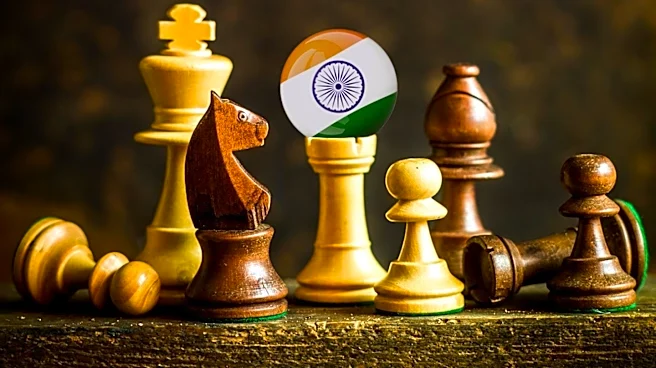
India's Indo-Pacific strategy is centered on expanding national engagement and strengthening strategic partnerships with like-minded states to foster a free, open, and inclusive region. This strategy aims to balance the geopolitical rivalry between the U.S.
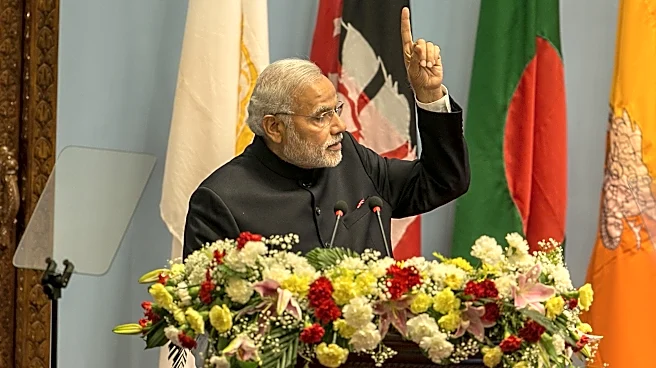
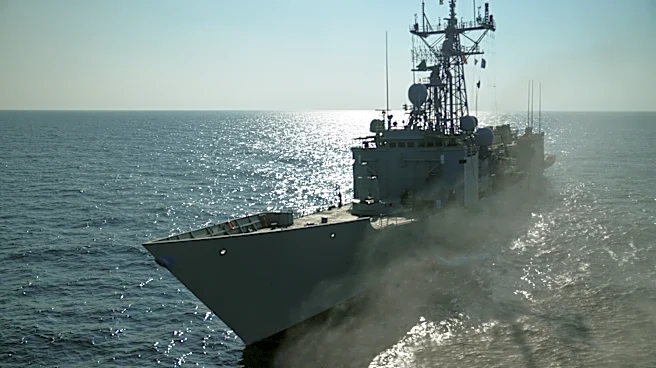
and China through initiatives such as Act East, SAGAR, the Indo-Pacific Oceans Initiative, and MAHASAGAR. India is also deepening ties with countries like Indonesia, Australia, and Pacific partners. The strategy acknowledges significant maritime security challenges, including traditional military threats, territorial disputes, and non-traditional issues like piracy and drug trafficking. India's Prime Minister Narendra Modi has articulated that India views the Indo-Pacific not as an exclusive club or a strategy directed against any specific country, but rather as a region promoting a democratic and rules-based international order.
Why It's Important?
India's Indo-Pacific strategy is crucial for maintaining regional stability and securing its own economic and security interests. With over 90% of India's trade by volume passing through the Indian Ocean, a resilient maritime strategy is essential. The region is a hub for global hegemonic rivalry, and India's approach seeks to navigate this complex environment by balancing its relationships with both the U.S. and China. Strengthening partnerships with regional countries helps counter non-traditional maritime security challenges and ensures freedom of navigation. The strategy's success hinges on India's ability to enhance its institutional capacity, increase defense spending, and prioritize the Indian Ocean region, thereby closing the gap between its strategic commitments and their effective implementation. This proactive stance by India contributes to a multipolar regional order, potentially mitigating the dominance of any single power.
What's Next?
To fully realize its Indo-Pacific ambitions, India needs to strengthen its domestic institutions and enhance its defense and maritime capabilities. This includes increasing defense expenditure and modernizing its naval forces to expand its presence in the Indian Ocean Region. India will also need to continue its pragmatic balancing act between the U.S. and China, leveraging its cultural and civilizational ties to build trust and strengthen strategic partnerships. The successful execution of strategic commitments, which has been identified as a significant constraint, will be critical. Future efforts will likely focus on concrete actions to bridge this implementation gap, ensuring that India's strategic vision translates into tangible outcomes for regional security and cooperation.
Beyond the Headlines
The deeper implications of India's Indo-Pacific strategy extend to the evolving global power dynamics. By advocating for a free, open, and inclusive region, India is subtly challenging unilateral assertions of power and promoting a rules-based international order. This strategy reflects a broader trend among middle powers to assert their influence and shape regional security architectures. The emphasis on cultural and civilizational ties as a basis for partnerships suggests a soft power approach alongside military and economic engagement. However, the challenge lies in sustaining this balance while confronting the realities of great power competition and internal institutional limitations. India's success could serve as a model for other nations seeking to navigate a complex geopolitical landscape without being drawn into exclusive blocs.