










What's Happening?
A study conducted by United Way Mumbai under the India Climate Action Project (ICAP) has revealed significant environmental and economic benefits of regenerative agriculture practices in Maharashtra, India. The research, supported by HSBC, focused on drought-prone
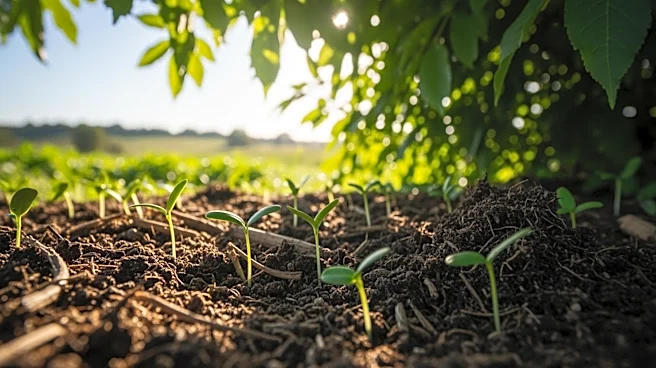
regions and found that these practices can increase soil moisture retention by up to 40% and improve crop yield quality for nearly 59% of surveyed farmers. The study, titled 'Evaluating the Economic Viability of Regenerative Agriculture in Water-Scarce Regions: Evidences from Marathwada,' also highlighted the reduction in cultivation costs and labor requirements due to the use of organic inputs like Jeevamrut and Dashaparni. These findings suggest that regenerative agriculture can enhance farm efficiency and environmental sustainability in water-stressed areas.
Why It's Important?
The study underscores the potential of regenerative agriculture to address critical environmental challenges such as soil degradation and water scarcity, which are exacerbated by climate change. By improving soil health and water conservation, these practices can contribute to more sustainable agricultural systems. This is particularly relevant for regions facing frequent droughts, as it can help stabilize food production and support local economies. The economic benefits, including reduced costs and increased resilience to pests and diseases, further incentivize farmers to adopt these practices. The findings also emphasize the importance of market access and institutional support in scaling these practices, which could lead to broader adoption and greater impact.
What's Next?
The study suggests that strengthening market linkages and farmer institutions, such as Farmer Producer Organisations (FPOs), is crucial for the long-term viability of regenerative agriculture. These platforms can enhance farmers' access to markets and improve value realization. Additionally, capacity-building efforts and institutional support are necessary to facilitate the adoption and scalability of these practices. As the study was conducted in India, its findings could inform similar initiatives in other regions facing environmental and agricultural challenges, potentially influencing policy and investment decisions in sustainable agriculture.
Beyond the Headlines
The adoption of regenerative agriculture practices not only addresses immediate environmental and economic concerns but also contributes to long-term sustainability goals. By promoting biodiversity and reducing reliance on chemical inputs, these practices align with global efforts to combat climate change and protect ecosystems. The study highlights the role of community-based approaches and collective action in driving sustainable development, which could inspire similar models in other sectors. Furthermore, the integration of traditional knowledge and modern techniques in regenerative agriculture presents an opportunity to innovate and adapt to changing environmental conditions.