
What's Happening?
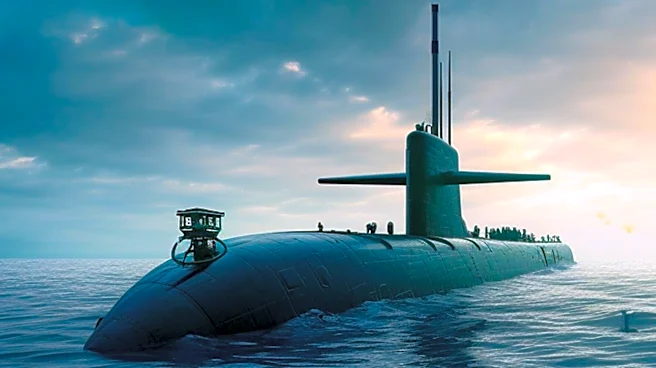
The U.S. Navy is developing the Columbia-class submarines to replace the aging Ohio-class ballistic missile submarines. The Columbia-class, consisting of twelve planned submarines, is set to enter service
in the early 2030s. This new class will become the primary strategic nuclear deterrent at sea for the United States, with each submarine designed for a 42-year service life without the need for reactor refueling. The program, initially estimated at $109.8 billion, has seen cost increases due to inflation and other factors, with current estimates exceeding $126 billion. The lead submarine, USS District of Columbia, is under construction, with a major procurement package awarded for additional submarines.
Why It's Important?
The Columbia-class submarines are crucial for maintaining the U.S. Navy's strategic nuclear deterrence capabilities. As the Ohio-class submarines retire, the Columbia-class will ensure the continuity of the sea-based leg of the U.S. nuclear triad. This transition is vital for national security, as these submarines provide a secure second-strike capability, deterring potential nuclear threats. The program's cost and complexity highlight the challenges of modernizing military assets while managing budget constraints. The successful deployment of these submarines will reinforce the U.S.'s strategic military posture well into the 2080s.
What's Next?
The U.S. Navy will continue the construction and integration of the Columbia-class submarines, with the first expected to enter service in the early 2030s. As production stabilizes, costs for subsequent submarines are anticipated to decrease. The Navy will also focus on maintaining the industrial capacity to produce both Columbia-class and Virginia-class submarines, ensuring a robust and capable submarine fleet. Ongoing funding and management will be critical to meeting the program's objectives and timelines.