

What's Happening?
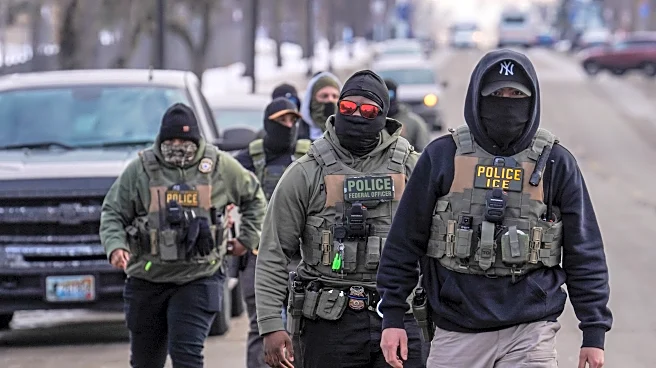
Actor and Monty Python alum John Cleese has raised concerns about the United States hosting the FIFA World Cup following a controversial incident involving Immigration and Customs Enforcement (ICE) in Minnesota. The incident in question involved the fatal
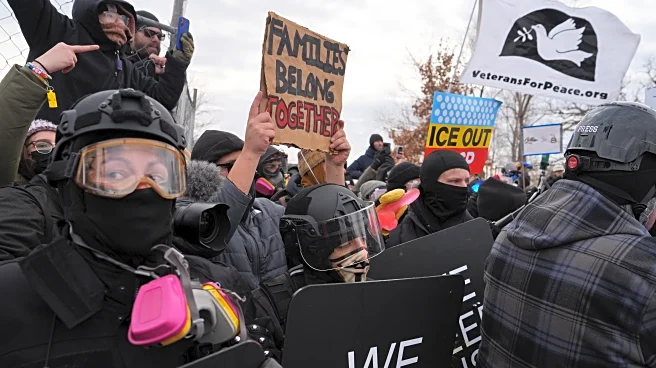
shooting of Renee Good by an ICE agent. According to Department of Homeland Security Secretary Kristi Noem, Good was shot after she allegedly attempted to run over ICE agents with her vehicle. Cleese, however, has expressed skepticism about this account and has shared posts questioning the rule of law in the U.S. in light of this event. The incident has sparked significant public outcry, with protests erupting in Minneapolis and prominent figures like Hillary Clinton and Representative Ilhan Omar criticizing the actions of ICE. The Minnesota Timberwolves even held a moment of silence for Good during a recent game.
Why It's Important?
The incident and subsequent reactions highlight ongoing tensions surrounding immigration enforcement in the United States. The criticism from public figures and the protests in Minneapolis underscore a broader debate about the use of force by ICE and the Trump administration's immigration policies. Cleese's comments bring international attention to these issues, potentially affecting the perception of the U.S. as a suitable host for global events like the World Cup. The situation also reflects the deep political and social divides in the country, with implications for public policy and international relations. The controversy could influence future decisions by international organizations like FIFA when considering the U.S. as a host for major events.
What's Next?
The incident is likely to continue to fuel debate over immigration enforcement practices in the U.S. and may lead to increased scrutiny of ICE operations. Political leaders and civil rights organizations may push for investigations or policy changes in response to the public outcry. The international community, including FIFA, may also monitor the situation closely as they assess the U.S. as a potential host for future events. The ongoing protests and public discourse could influence legislative actions or executive decisions related to immigration and law enforcement practices.