



What's Happening?
Honolulu's affordable housing program, established by Bill 7 in 2019, is significantly underperforming its goals, according to a report from the University of Hawaiʻi Economic Research Organization (UHERO). The program aimed to complete 500 affordable units
annually, but as of September, only 224 units across seven projects have been completed since its inception. This shortfall is attributed to persistently high interest rates and a 30% increase in construction costs since 2019. Additionally, permitting processes have been slow, with the median waiting time for city building permits being 531 days, far exceeding the statutory 90-day target. While the Department of Planning and Permitting reports 412 units completed across 11 projects, this still falls short of the program's annual target. The UHERO report indicates that while the program is directionally sound, current economic conditions make building under its framework much more expensive.
Why It's Important?
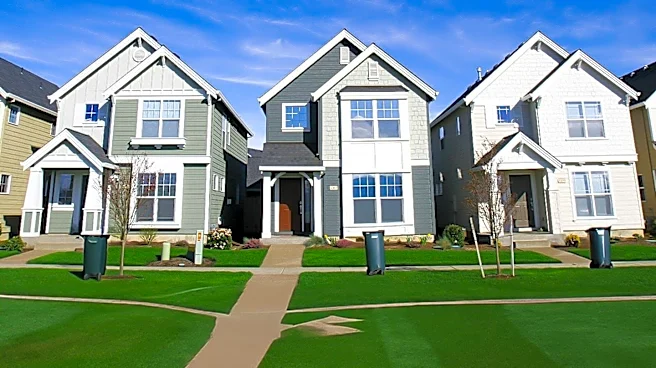
The underperformance of Honolulu's affordable housing program has significant implications for the city's housing crisis, where affordability is a major concern. The failure to meet housing targets exacerbates the existing shortage of affordable rental units, impacting moderate-income households who were the primary beneficiaries of Bill 7. The increased costs of construction and high interest rates, coupled with bureaucratic delays in permitting, create a challenging environment for developers, potentially discouraging future affordable housing projects. This situation could lead to continued upward pressure on rental prices and further strain on residents' finances. The report highlights systemic issues within the housing development process in Honolulu, suggesting that current incentives may not be sufficient to overcome prevailing economic headwinds and administrative inefficiencies.
What's Next?
The UHERO report provides valuable insights that could prompt Honolulu city officials to re-evaluate and potentially revise the Bill 7 program. City Council Chair Tommy Waters has acknowledged the concerns and emphasized the need for improvements, particularly in reducing permitting delays. The UHERO's housing policy simulator, an interactive tool designed to assess project feasibility and potential policy changes, could be utilized by policymakers to explore alternative strategies. This tool suggests that while Bill 7 improved the estimated return on cost, it still falls short of investor expectations. Future actions may include streamlining the permitting process, offering additional financial incentives to offset rising costs, or exploring new legislative measures to stimulate affordable housing development more effectively. Stakeholders, including developers and housing advocates, will likely push for concrete reforms to address the identified shortcomings.
Beyond the Headlines
Beyond the immediate impact on housing supply, the challenges faced by Honolulu's affordable housing program reflect broader national trends in urban development, where rising construction costs, interest rates, and regulatory hurdles impede efforts to address housing affordability. The situation in Honolulu underscores the complex interplay between economic factors, local governance, and social welfare. The program's secondary benefits, such as promoting sustainability, transit use, and walkable communities, highlight a holistic approach to urban planning that is being undermined by its primary objective's failure. This raises questions about the effectiveness of incentive-based policies in volatile economic climates and the need for more robust, adaptable frameworks to achieve critical urban development goals. The long-term implications could include increased social inequality and reduced economic mobility for residents if the housing crisis continues unabated.