







What's Happening?
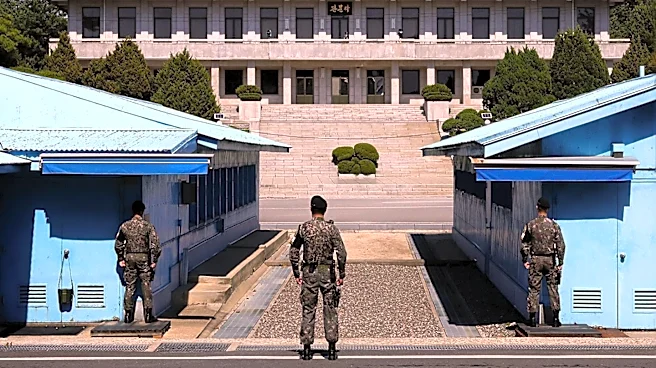
North Korea has strongly condemned the Financial Action Task Force (FATF) for maintaining its designation as a 'high-risk jurisdiction' for money laundering, terrorist financing, and weapons proliferation. The FATF, an intergovernmental body, reaffirmed
this status at a meeting in Paris in late October, citing Pyongyang's 'continued failure to address significant deficiencies' in its anti-money laundering framework and the 'serious threats' posed by its illicit activities related to weapons of mass destruction. North Korea's Foreign Ministry, through the Korean Central News Agency (KCNA), rejected the label as a 'fabrication by the United States and its followers,' accusing the FATF of being a 'conspiracy group' serving U.S. hostile policy. Pyongyang asserted that 'money laundering,' 'financing of terrorism,' 'drug trafficking,' and 'counterfeiting' have 'nothing to do with the DPRK' and vowed not to tolerate any infringement on its sovereignty. The FATF has classified North Korea as a high-risk jurisdiction since 2011 and recommends that countries implement countermeasures, including restrictions on dealings with North Korean financial institutions.
Why It's Important?
This ongoing dispute highlights the significant international pressure on North Korea regarding its financial activities and its persistent defiance of global norms. The FATF's designation means that countries are urged to apply enhanced due diligence and, in some cases, countermeasures, which further isolates North Korea from the international financial system. This isolation is intended to curb Pyongyang's ability to fund its weapons programs, particularly those involving weapons of mass destruction, which pose a direct threat to regional and global security. North Korea's strong rejection of the FATF's findings and its accusation of U.S. political manipulation underscore its unwillingness to comply with international financial regulations, making it challenging for any nation to engage in legitimate financial transactions with the country without incurring significant risks. The continued blacklisting reinforces the international community's efforts to choke off funding for North Korea's illicit activities, impacting its economic stability and its capacity to develop advanced weaponry.
What's Next?
The FATF is expected to continue monitoring North Korea's adherence to anti-money laundering and counter-terrorist financing standards. Given North Korea's consistent rejection of these designations and its accusations of political motivation, it is unlikely that Pyongyang will make significant changes to its financial practices in the near future. The FATF will likely maintain its call for countries to implement countermeasures, further solidifying North Korea's financial isolation. This situation could lead to increased scrutiny of entities and individuals engaging in transactions with North Korea, potentially resulting in more sanctions or enforcement actions by individual nations, including the United States. The ongoing standoff also suggests that any future diplomatic engagements with North Korea will likely continue to face the hurdle of its illicit financial activities and its refusal to acknowledge international financial regulations.
Beyond the Headlines
The persistent blacklisting of North Korea by the FATF and Pyongyang's strong reaction reveal a deeper geopolitical struggle. North Korea views these financial regulations as part of a broader 'hostile policy' orchestrated by the United States, rather than as legitimate efforts to combat illicit finance. This perspective complicates any potential for dialogue or de-escalation, as North Korea frames compliance as an infringement on its sovereignty. The situation also highlights the limitations of international financial bodies when confronted with a state that prioritizes its perceived national interests and security over global financial transparency. The long-term implications include a further entrenchment of North Korea's isolation, potentially driving it to seek alternative, less transparent financial channels and strengthening its reliance on illicit activities to sustain its regime and weapons programs. This also raises questions about the effectiveness of such designations in altering the behavior of highly resistant states.