
What's Happening?
A recent exploratory study involving university students investigated the effectiveness of AI-powered interventions, including chatbots and socially assistive robots (SARs), in delivering Cognitive Behavioral
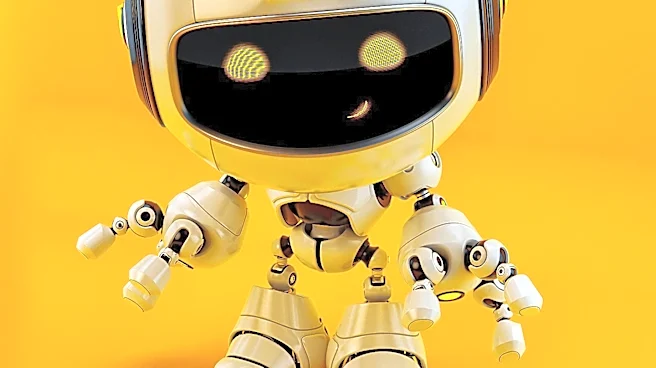
Therapy (CBT) exercises to reduce anxiety. The study compared three modalities: traditional worksheets, a text-based chatbot, and a SAR. While all conditions showed a decrease in general psychological distress over a two-week period, the worksheet condition demonstrated the largest long-term improvement in therapeutic outcomes. However, the robot condition showed the most frequent immediate reductions in anxiety after individual sessions, followed by the chatbot. The study found that both the robot and chatbot interventions were particularly effective in reducing post-session anxiety for individuals with higher-than-average baseline anxiety. Participants in the robot condition reported a more positive experience, attributing it to the physical presence and non-verbal cues of the robot, which made interactions feel more human and engaging compared to the text-based chatbot.
Why It's Important?
This research highlights the evolving role of artificial intelligence in mental health care, particularly in making therapeutic interventions more accessible and engaging. The finding that SARs and chatbots are especially beneficial for individuals with elevated anxiety suggests a potential for these technologies to address a significant public health need, as anxiety disorders are prevalent among U.S. college students and the general population. By offering accessible and potentially less intimidating alternatives to traditional therapy, AI-powered tools could help bridge gaps in mental health service provision, especially for those who face barriers to accessing conventional care due to cost, stigma, or availability. The study also underscores the importance of embodiment in AI, as the physical presence of the robot significantly enhanced user experience and engagement, suggesting that the design of AI interfaces can profoundly impact their therapeutic efficacy. This could lead to new approaches in developing mental health support systems that are not only effective but also foster a sense of connection and trust.
What's Next?
Future research will need to address several limitations of this exploratory study, including increasing sample size and study duration to confirm the preliminary trends observed. Investigating therapist-in-the-loop approaches that integrate AI tools with human clinical practice could enhance the effectiveness and safety of these interventions. There is also a need to balance the variety of CBT exercises with the frequency of use to prevent participant fatigue and improve adherence. Incorporating features like between-session memory recall in AI systems could provide more personalized and continuous support, addressing a key desire expressed by participants. Further exploration into how to create more immersive interactions, such as guiding users through meditative breathing exercises, could also enhance the therapeutic experience. Additionally, future studies should consider isolating the effects of physical embodiment versus auditory output by including a voice-enabled chatbot or a screen-based virtual agent as a control condition to better understand the specific contributions of each element to user engagement and therapeutic outcomes.
Beyond the Headlines
The study's findings delve into the deeper psychological and social implications of human-AI interaction in therapeutic contexts. The observation that participants felt a sense of connection and trust with the robot, despite knowing it was an AI, raises questions about the nature of therapeutic alliance and how it can be fostered beyond traditional human-to-human relationships. The 'proximity paradox' mentioned in related discussions, where closer interaction with AI can increase anxiety for some, contrasts with the positive engagement seen in this study, suggesting that the design and purpose of AI are crucial. The ethical considerations of AI in mental health are also brought to the forefront, particularly regarding the potential for AI to offer generic advice or lack empathy, and the need for robust safety measures, especially in cases of severe mental health concerns. As AI becomes more integrated into daily life, understanding how it shapes our emotional responses, coping mechanisms, and even our expectations of interpersonal relationships will be critical for developing responsible and beneficial AI applications.