
What's Happening?
Gerald Steinberg, president of NGO Monitor, has presented documents allegedly captured by the IDF in Gaza, which suggest that Hamas has embedded operatives within humanitarian organizations and hospitals.
According to Steinberg, these documents reveal a system where Hamas-appointed 'guarantors' were placed inside NGOs to gather information, influence operations, and redirect aid to support Hamas's priorities. The documents reportedly show that these operatives were involved in both humanitarian and military activities, using civilian infrastructure for military purposes. Steinberg claims that foreign staff in Gaza were aware of Hamas's influence but did not publicly acknowledge it. The allegations also extend to specific individuals, such as Dr. Hussam Abu Safiya, who is accused of having ties to Hamas while working as a hospital director and writing for international media.
Why It's Important?
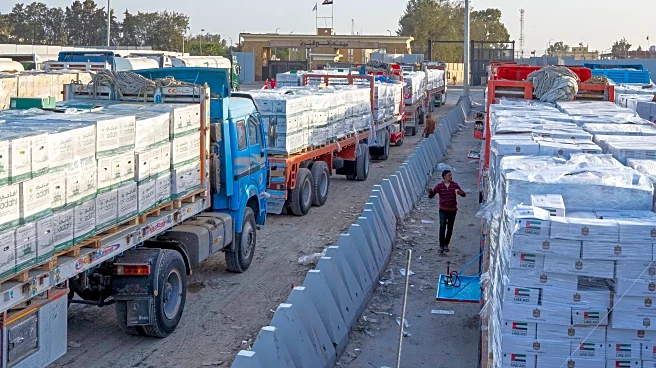
The allegations, if substantiated, could have significant implications for international aid operations in conflict zones, particularly in Gaza. They raise concerns about the effectiveness of oversight mechanisms in place to ensure that humanitarian aid is not diverted to support militant activities. This could lead to increased scrutiny and potential changes in how aid is distributed and monitored, affecting the operations of major international NGOs. The claims also highlight the complex interplay between humanitarian efforts and political dynamics in regions affected by conflict, potentially influencing future policy decisions by donor countries and international organizations.
What's Next?
The revelations could prompt calls for more stringent oversight and transparency in the operations of NGOs working in conflict zones. There may be increased pressure on governments and international bodies to implement stricter regulations to prevent the misuse of humanitarian aid. Additionally, the allegations could lead to diplomatic tensions, as countries that fund these NGOs may demand accountability and assurances that their aid is not being misused. The situation may also influence ongoing discussions about the role of international organizations in conflict resolution and peacekeeping efforts.
Beyond the Headlines
The broader implications of these allegations touch on the ethical responsibilities of NGOs operating in conflict zones. The potential misuse of humanitarian aid for military purposes raises questions about the accountability of NGOs and their ability to operate independently in politically charged environments. This situation underscores the need for a balance between providing necessary aid and ensuring that such aid does not inadvertently support conflict. It also highlights the challenges faced by NGOs in maintaining neutrality and credibility while operating in areas controlled by militant groups.