







What's Happening?
GREEN×EXPO 2027, an International Horticultural Exposition, is scheduled to take place in Yokohama, Japan, from March 19 to September 26, 2027. Recognized as a major Category A1 world exposition by the BIE and AIPH, the event will be held under the theme
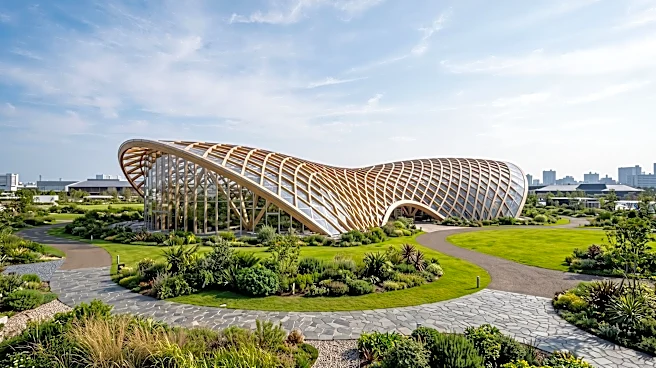
'Landscapes of the Future for Happiness.' The expo aims to provide a platform for reflection on the Earth's future, addressing environmental and climate challenges and promoting harmonious coexistence with nature. The event will span 100 hectares on the former Kamiseya military base and will feature approximately 10 million flowers and plants. It will be organized into five themed villages and several pavilions, including a Themed Pavilion designed by Japanese architect Kengo Kuma. A notable controversy surrounds the potential reuse of soil decontaminated from the 2011 Fukushima nuclear accident on the expo site, a plan opposed by some Yokohama residents due to the site's proximity to residential areas. Online ticketing for the event has been available since March 19, 2026.
Why It's Important?
While primarily an international event, GREEN×EXPO 2027 holds significance for U.S. environmental and horticultural sectors. The expo's focus on sustainable urban development, green spaces, and humanity's relationship with the plant world aligns with growing environmental concerns and initiatives in the United States. U.S. businesses and researchers in horticulture, urban planning, and sustainable technologies can gain valuable insights from the innovations and discussions presented at the expo. The event offers a unique opportunity to observe global best practices in ecological design and climate resilience, which could influence future U.S. public policy and private sector investments in green infrastructure. Furthermore, the controversy surrounding the 'reconstruction soil' highlights critical considerations for environmental remediation and public acceptance of such projects, offering lessons for similar challenges in the U.S. The expo's emphasis on international collaboration in addressing climate challenges underscores the interconnectedness of global environmental efforts.
What's Next?
As GREEN×EXPO 2027 approaches, further details regarding participating countries, specific exhibits, and resolutions to the 'reconstruction soil' controversy are anticipated. The Japanese government and the city of Yokohama will likely need to address public concerns regarding the soil reuse plan to ensure smooth execution of the event. For international attendees, including those from the U.S., planning for visits will involve securing tickets and making travel arrangements, with recommendations to visit on weekdays to avoid crowds. The expo's outcomes, particularly in showcasing innovative solutions for environmental challenges, could inspire new partnerships and technological exchanges between Japan and the U.S. in areas like sustainable agriculture, urban greening, and climate-resilient design. The event's long-term impact will be measured by its contribution to global environmental awareness and the adoption of sustainable practices worldwide.
Beyond the Headlines
The GREEN×EXPO 2027 transcends a typical horticultural exhibition by embedding deep ethical and environmental considerations. The debate over using 'reconstruction soil' from Fukushima raises profound questions about public trust, risk perception, and the ethical boundaries of environmental remediation. It highlights the challenge of balancing scientific assurances of safety with community concerns, a dilemma frequently encountered in environmental projects globally, including in the U.S. The expo's overarching theme of 'Landscapes of the Future for Happiness' encourages a cultural shift towards valuing nature and sustainability as integral components of human well-being. This aligns with a growing global movement to integrate ecological principles into urban planning and daily life, fostering a deeper connection between humans and their natural surroundings. The event could serve as a catalyst for broader discussions on how societies can heal and rebuild in the aftermath of environmental disasters, while also promoting innovative solutions for a sustainable future.