




What's Happening?
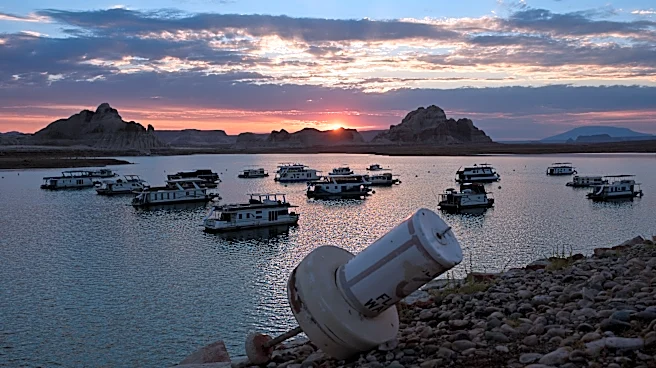
The U.S. Bureau of Reclamation has proposed a plan to address water shortages on the Colorado River, suggesting significant cuts to water allocations for Lower Basin states, including Arizona. The plan, outlined in the Post-2026 Operational Guidelines
and Strategies for Lake Powell and Lake Mead, aims to manage river operations post-2026. Phoenix, which relies on the Colorado River for about 40% of its drinking water, is preparing for these potential cuts. The city has invested in conservation, underground water storage, and infrastructure projects like the Drought Pipeline Project to mitigate the impact. Despite these preparations, Phoenix officials, including Mayor Kate Gallego, express concern over the disproportionate burden placed on Arizona compared to Upper Basin states.
Why It's Important?
The proposed cuts to the Colorado River water supply are significant for Phoenix and other Lower Basin states, as they could impact water availability for millions of residents and businesses. Phoenix's proactive measures, such as water conservation and infrastructure investments, highlight the city's commitment to ensuring a reliable water supply. However, the federal plan's perceived inequity could lead to political and legal challenges, as Arizona and other affected states may seek more balanced solutions. The situation underscores the broader issue of water scarcity in the American Southwest, which could have long-term implications for regional growth and sustainability.
What's Next?
Phoenix will continue to monitor the development of the federal guidelines and assess their potential impact on the city's water supply. The city may need to draw on stored water reserves and increase investments in new water resources and infrastructure. Additionally, Phoenix plans to expand conservation programs and encourage residents and businesses to use water more efficiently. The city remains in Stage 1 of its Drought Management Plan, focusing on public education and conservation, but could escalate to Stage 2, which includes more aggressive conservation measures and potential drought surcharges, by the end of 2026.