








What's Happening?
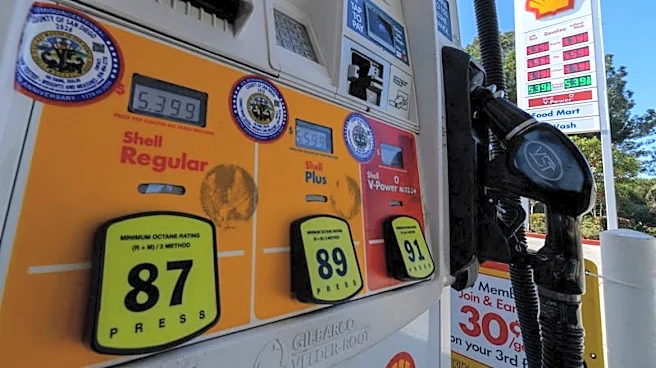
Gasoline prices in the United States have risen significantly, averaging $3.87 per gallon as of July 13, 2026, which is over 70 cents higher than the previous year. This increase is attributed to renewed military strikes between the United States and
Iran, which have disrupted energy shipments through the Strait of Hormuz. Despite the U.S. being a leading oil producer and exporting more oil than it imports, the global nature of the oil market means that conflicts in oil-rich regions can still affect domestic prices. The West Coast, particularly reliant on Middle Eastern oil, has seen prices soar to $5.93 per gallon in California. The situation is reminiscent of past oil crises, though the current impact is more about price hikes than shortages.
Why It's Important?
The rise in gas prices has significant implications for American consumers and the broader economy. Higher fuel costs can lead to increased transportation and production expenses, which may be passed on to consumers in the form of higher prices for goods and services. This situation underscores the interconnectedness of global oil markets and the vulnerability of even oil-rich nations like the U.S. to geopolitical tensions. The economic strain is felt most acutely by consumers at the pump, while oil companies may benefit from higher selling prices. The situation also highlights the need for energy diversification and resilience against global supply disruptions.
What's Next?
The future of gas prices will largely depend on the geopolitical developments between the U.S. and Iran. If tensions continue, prices may remain elevated or even increase further. Conversely, a stable ceasefire or diplomatic resolution could help stabilize or reduce prices. Additionally, the restoration of damaged oil infrastructure in the Middle East will be crucial for normalizing supply levels. Policymakers and industry leaders may need to consider strategies to mitigate the impact of such conflicts on domestic energy prices, including investing in alternative energy sources and enhancing domestic production capabilities.