
What's Happening?
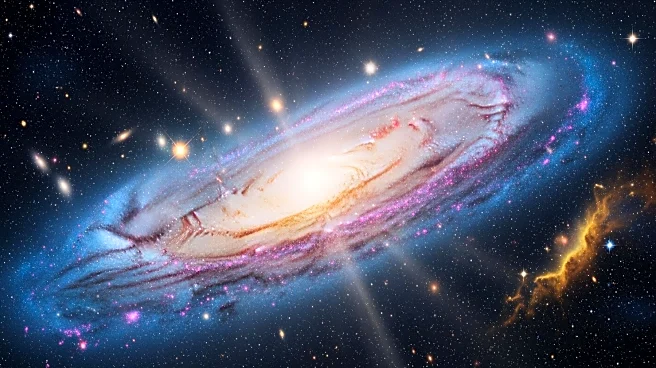
Astronomers have observed a star in the Andromeda Galaxy, designated M31-2014-DS1, quietly collapsing into a black hole without the typical supernova explosion. This discovery was made by a team led by Columbia
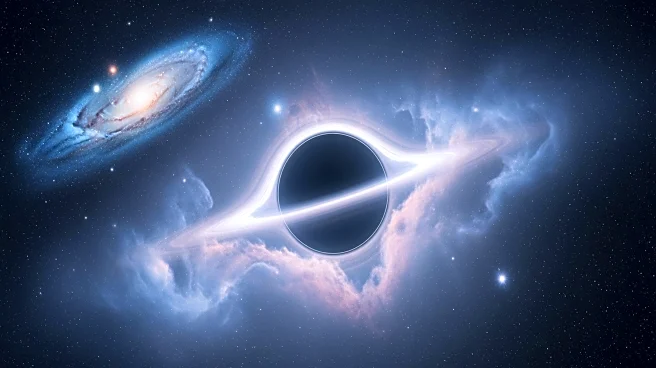
University astronomer Kishalay De, who analyzed archival data from NASA's NEOWISE mission. The star, once one of the brightest in the Andromeda Galaxy, mysteriously brightened, faded, and then vanished over a decade. This event challenges the traditional understanding that only very massive stars form black holes. The star, weighing 13 times the mass of the sun, collapsed into a black hole, leaving behind a faint glow from dust and gas swirling around it. This observation suggests that there may be more black holes in the universe than previously thought.
Why It's Important?
This discovery is significant as it challenges the long-held belief that only massive stars can form black holes. The observation of M31-2014-DS1's quiet collapse into a black hole suggests that smaller stars can also undergo this transformation. This finding could lead to a reevaluation of the number of black holes in the universe, impacting our understanding of stellar evolution and the lifecycle of stars. The ability to detect such events without the typical supernova explosion opens new avenues for studying black holes and their formation, potentially leading to advancements in astrophysics and our comprehension of cosmic phenomena.
What's Next?
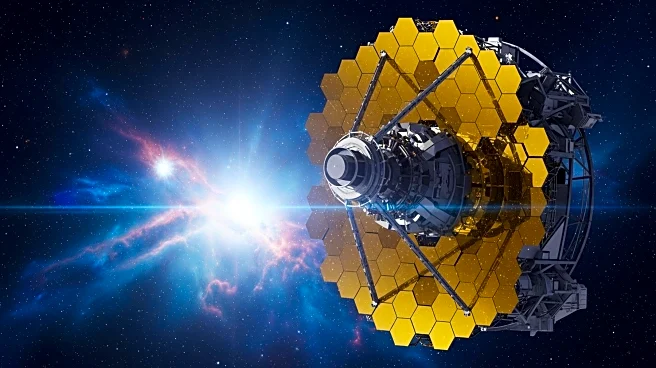
Future observations using powerful telescopes like the James Webb Space Telescope (JWST) are expected to continue monitoring the fading debris around the newly formed black hole. These observations will help astronomers understand the long-term behavior of such events and refine models of black hole formation. Additionally, researchers may use this discovery as a blueprint to identify similar occurrences in other galaxies, enhancing our knowledge of black hole demographics and the processes leading to their creation.