




What's Happening?
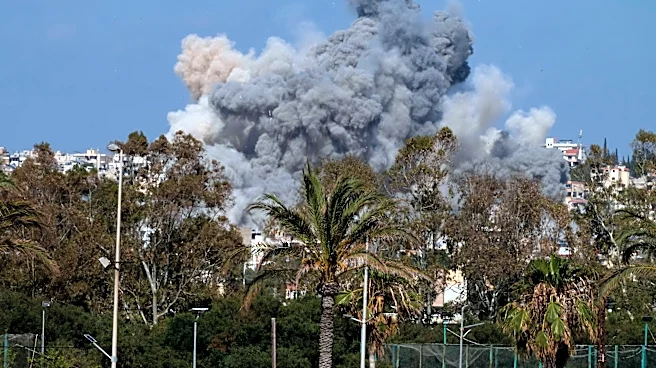
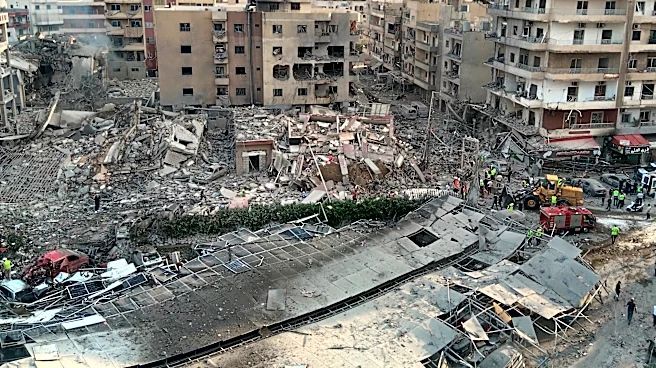
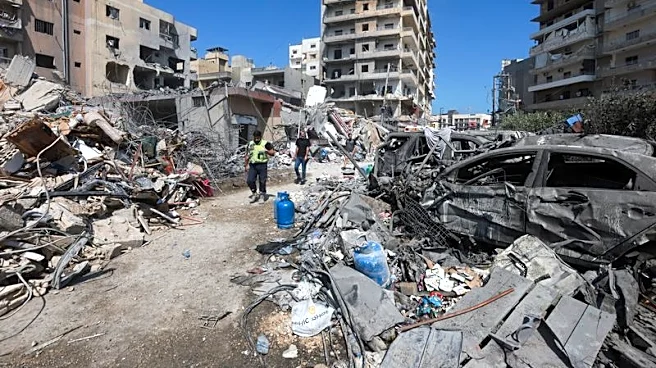
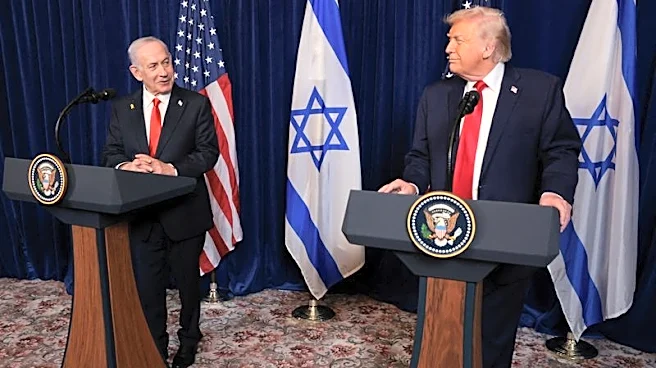
Israel and Lebanon have reached an agreement to implement a ceasefire, facilitated by the United States, following negotiations in Washington. The ceasefire requires Hezbollah, an Iran-aligned militia, to cease fire and evacuate its operatives from the South
Litani Sector. This agreement follows a previous ceasefire attempt that failed to halt hostilities. The conflict escalated when Israel invaded Lebanon in March in response to Hezbollah's cross-border attacks. Iran has stated that it will not agree to a resolution unless the ceasefire also includes Lebanon. The agreement aims to reduce tensions and pave the way for further negotiations to address unresolved issues.
Why It's Important?
The ceasefire agreement is a critical step towards de-escalating the conflict between Israel and Hezbollah, which has broader implications for regional stability in the Middle East. The involvement of the United States highlights its role in mediating peace efforts in the region. Successful implementation of the ceasefire could lead to improved security conditions and potentially open the door for more comprehensive peace talks. However, the fragile nature of the agreement and the complex geopolitical interests involved pose significant challenges to its sustainability. The outcome of this ceasefire could influence U.S. foreign policy and its strategic interests in the Middle East.