

What's Happening?
Michigan Senate candidate and former congressman Mike Rogers has been accused of misleading supporters in a fundraising email by claiming he saw Osama bin Laden's dead body 'with my own eyes.' This statement implies a direct involvement in the 2011 raid
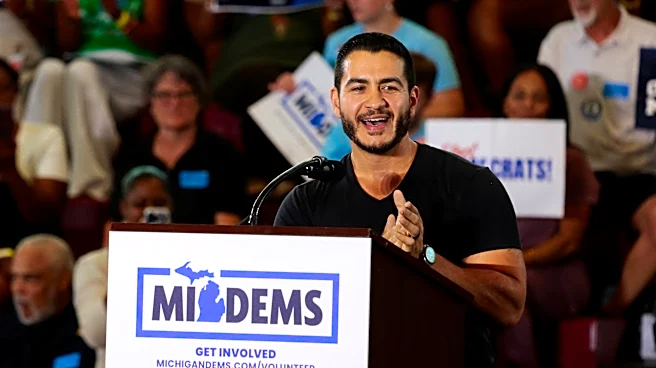
that killed the al-Qaida leader. However, Rogers was not present in Abbottabad, Pakistan, during the raid, nor was he in the White House Situation Room. At the time, as chair of the House intelligence committee, he was informed of the raid via a phone call from then-CIA director Leon Panetta while at his home in Washington D.C. While Rogers did see a photograph of bin Laden's dead body, he supported the decision not to make the graphic images public, citing concerns about inflaming public opinion and conspiracy theories. This claim is part of a broader pattern where Rogers has been criticized for exaggerating his role in counter-terrorism efforts, particularly since his opponent, Abdul El-Sayed, a Muslim doctor, entered the Senate race.
Why It's Important?
This incident highlights the contentious nature of political campaigning, where candidates may embellish their past achievements to appeal to voters. For Michigan voters, the accuracy of a candidate's claims about national security experience can be a significant factor in their decision-making, especially in a Senate race. The misrepresentation of direct involvement in a high-profile event like the killing of Osama bin Laden could raise questions about a candidate's credibility and honesty. Furthermore, the context of this claim, made in opposition to a Muslim candidate, raises concerns about the use of national security rhetoric to create divisions or imply a lack of patriotism. The incident underscores the importance of fact-checking in political discourse and the potential for such claims to influence public perception and electoral outcomes.
What's Next?
The Rogers campaign will likely face continued scrutiny over this claim, potentially leading to demands for clarification or retraction. The media and political opponents will likely use this incident to question Rogers's integrity and judgment. This could impact his standing in the Michigan Senate race, potentially alienating voters who value factual accuracy and transparency. The broader debate around the use of national security credentials in political campaigns, especially when facing opponents from diverse backgrounds, may also intensify. Candidates will likely be more cautious about the precise language they use when describing their past experiences, knowing that such claims are subject to rigorous fact-checking.
Beyond the Headlines
This event touches upon the ethical considerations of political rhetoric and the manipulation of public memory. The act of claiming direct witness to a significant historical event, even if based on indirect exposure (like viewing a photograph), can be seen as an attempt to appropriate a moment of national triumph for personal political gain. This raises questions about the responsibility of public figures to accurately represent their past and the potential for such misrepresentations to erode public trust in political institutions. The context of the claim being made against a Muslim opponent also brings to light the persistent issue of Islamophobia in political campaigns and the tendency to weaponize national security narratives against minority candidates. This incident serves as a reminder of the need for vigilance against misleading statements in political discourse and the importance of holding candidates accountable for their words.