






What's Happening?
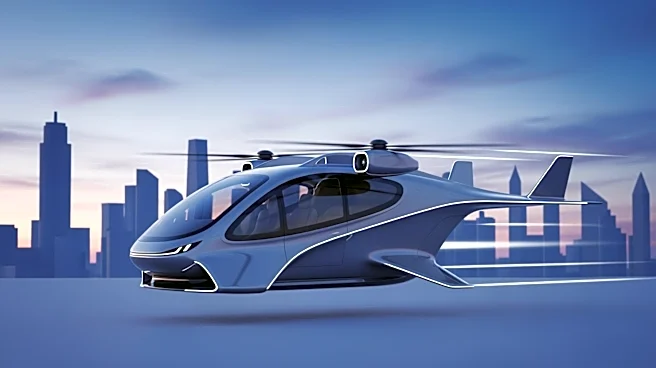
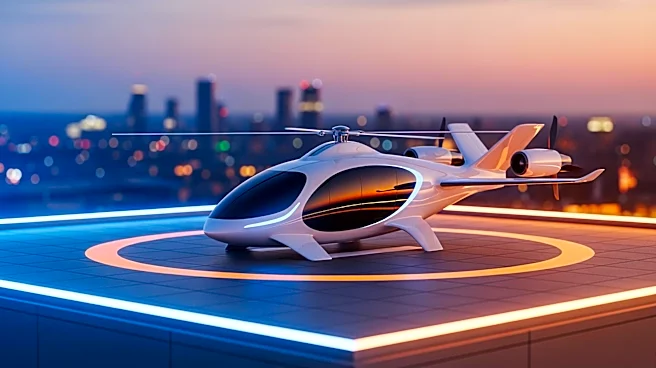
The Port Authority of New York and New Jersey, in collaboration with aviation company Joby, conducted the first demonstration of an electric air taxi in New York City. The test flight took place on Monday, launching from John F. Kennedy International
Airport and traveling to the West 30th heliport, then to the Downtown Skyport in Wall Street, before returning to JFK. This event marked the first point-to-point electric vertical takeoff and landing (eVTOL) demonstration in the city. The air taxis, which are battery-powered, are claimed to be emission-free and 100 times quieter than traditional helicopters. Although the project has not yet received FAA certification, it is in the final stages of approval for commercial operations.
Why It's Important?
The introduction of electric air taxis in New York City represents a significant advancement in urban transportation, potentially reducing traffic congestion and lowering emissions. The quieter, emission-free nature of these vehicles could transform how people commute in densely populated areas, offering a faster alternative to traditional road travel. This development aligns with broader efforts to integrate sustainable technologies into urban infrastructure, potentially setting a precedent for other cities. The success of this initiative could lead to increased investment in electric aviation technology, influencing public policy and urban planning strategies aimed at reducing carbon footprints.
What's Next?
The next steps for the electric air taxi project involve obtaining FAA certification to commence commercial operations. If successful, this could lead to the establishment of regular air taxi services in New York City, providing a new mode of transportation for residents and visitors. Stakeholders, including city planners and environmental groups, may closely monitor the project's progress to assess its impact on urban mobility and environmental sustainability. The outcome of this initiative could influence similar projects in other metropolitan areas, potentially accelerating the adoption of electric aviation technology across the United States.