
What's Happening?
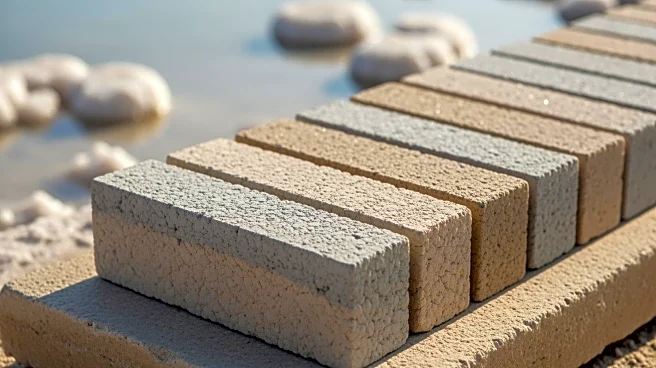
Israeli researchers from the Hebrew University and the Technion have developed an innovative building material made entirely from recycled salt, sourced from the Dead Sea. This initiative aims to address
the environmental burden posed by the construction industry, which is a significant contributor to global pollution and carbon emissions. The project, led by Professor Danny Mendler, involves compressing and processing excess salt into solid bricks with strength comparable to concrete. This development was showcased at the Venice Architecture Biennale, highlighting its potential as a sustainable alternative to traditional building materials.
Why It's Important?
The construction industry is a major environmental concern, responsible for a significant portion of global air pollution and carbon emissions. By developing building materials from recycled resources like Dead Sea salt, the initiative could substantially reduce the industry's carbon footprint. This approach not only offers a sustainable alternative to cement but also provides a solution to the environmental and logistical challenges posed by the accumulation of excess salt in the Dead Sea. If widely adopted, this innovation could transform waste into a valuable resource, promoting more sustainable construction practices.
What's Next?
The path to widespread adoption of salt bricks in construction is complex, requiring extensive standardization, strength, and durability testing. The lack of regulation and legislative support further complicates the development of new building materials. However, the project's success at the Venice Architecture Biennale suggests growing international recognition and interest. Future steps include building a real structure in Israel using these bricks, which could pave the way for broader industry acceptance and implementation.