
What's Happening?
During the 31st United Nations Climate Change Conference (COP31) in Antalya, Türkiye, African leaders and development partners emphasized the continent's climate priorities. On 'Africa Day,' held towards
the end of last week, there was a strong call for increased investment in water infrastructure and sanitation across Africa. Additionally, African representatives urged international partners to provide more accessible and flexible climate financing. This financing is sought to better respond to Africa's specific needs and realities in combating climate change and adapting to its impacts. The conference continues with these critical issues high on the agenda, reflecting Africa's push for greater support in its climate action efforts.
Why It's Important?
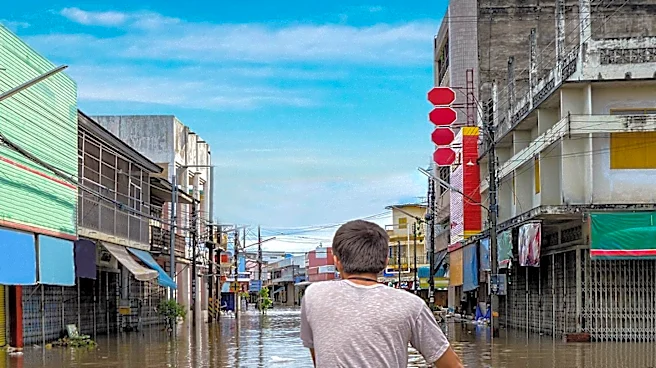
Africa's unified call for increased climate financing and water investment at COP31 is crucial for addressing the continent's disproportionate vulnerability to climate change impacts. Despite contributing minimally to global emissions, African nations face severe consequences, including droughts, floods, and water scarcity, which threaten food security, public health, and economic stability. The demand for more accessible and flexible financing highlights the current inadequacy of global climate funds, which often come with stringent conditions that hinder their effective utilization by African countries. Investing in water infrastructure and sanitation is fundamental for building resilience, improving public health, and supporting sustainable development across the continent. The outcome of these discussions at COP31 will significantly influence Africa's capacity to implement adaptation and mitigation strategies, impacting millions of lives and the continent's long-term development trajectory.
What's Next?
The ongoing discussions at COP31 will determine the extent to which international partners commit to Africa's demands for climate financing and water investment. African leaders will likely continue to advocate for concrete pledges, streamlined access to funds, and a more equitable distribution of climate finance. The focus will be on translating these calls into actionable policies and financial mechanisms that can be effectively deployed on the ground. Future steps may include the establishment of new funding facilities, capacity-building initiatives to help African nations access and manage climate finance, and partnerships for technology transfer in water management and renewable energy. The success of these negotiations will be critical for shaping Africa's climate resilience efforts in the coming years and influencing global climate justice discussions.
Beyond the Headlines
Africa's strong stance at COP31 transcends immediate financial needs, touching upon deeper issues of climate justice and historical responsibility. The continent's demand for increased and flexible financing challenges the existing global power dynamics in climate negotiations, advocating for a more equitable burden-sharing approach. The emphasis on water infrastructure also highlights the interconnectedness of climate change with fundamental human rights, including access to clean water and sanitation. This push could catalyze a broader re-evaluation of how climate finance is structured and disbursed globally, potentially leading to more localized, needs-based approaches. Furthermore, it underscores Africa's growing agency in international forums, asserting its priorities and seeking to shape the global climate agenda in a way that reflects its unique vulnerabilities and development aspirations.