







What's Happening?
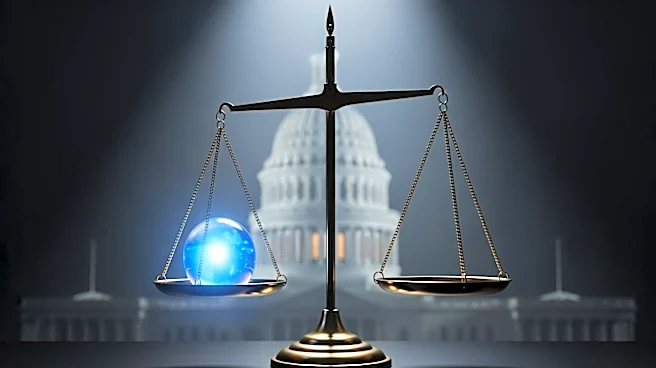
A recent commentary by professors from the University of Notre Dame highlights the concept of 'democratic neutrality' as a significant threat to democracy in the United States. According to their research, about half of the U.S. population exhibits democratic neutrality,
which is characterized by an unwillingness to support or oppose policies that undermine democratic principles. This neutrality is prevalent across political affiliations, including Republicans, Democrats, and nonpartisans. The professors argue that this stance is not passive but a choice that perpetuates democratic decline. They emphasize that neutrality allows authoritarian practices to gain ground, as individuals may tolerate undemocratic actions if they align with other favorable policies. The commentary calls for Americans to reject neutrality and actively support candidates who uphold democratic values, especially with the 2026 midterm elections approaching.
Why It's Important?
The issue of democratic neutrality is crucial as it highlights a widespread, yet often overlooked, factor contributing to the erosion of democratic norms in the U.S. By remaining neutral, a significant portion of the population indirectly supports the rise of authoritarian practices, which can lead to a weakening of democratic institutions. This phenomenon poses a risk to the stability and integrity of the democratic process, as it allows politicians who undermine democracy to gain power. The professors' call to action underscores the importance of active civic engagement and the need for voters to prioritize democratic principles over partisan loyalty. The upcoming midterm elections present an opportunity for citizens to influence the direction of American democracy by electing leaders committed to preserving democratic values.
What's Next?
As the 2026 midterm elections approach, the focus will be on whether voters heed the call to reject democratic neutrality and support candidates who prioritize democratic integrity. Political parties and candidates may need to address this issue directly, emphasizing their commitment to democratic principles to appeal to voters concerned about democratic erosion. Additionally, civic organizations and advocacy groups might increase efforts to educate the public about the dangers of neutrality and encourage active participation in the democratic process. The outcome of the elections could serve as an indicator of the public's stance on democratic neutrality and its willingness to confront this challenge.