






What's Happening?
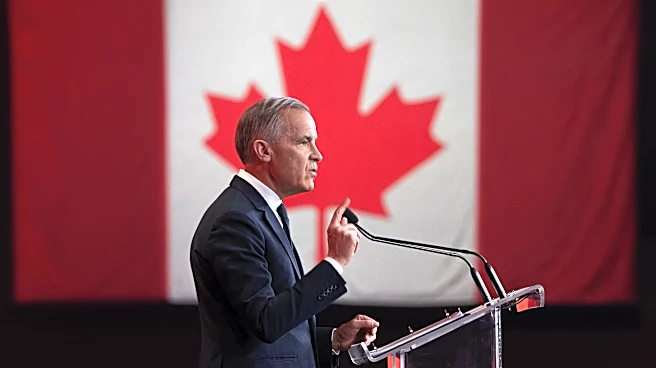
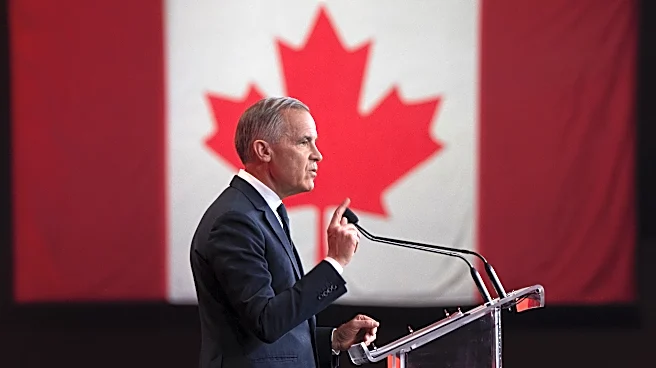
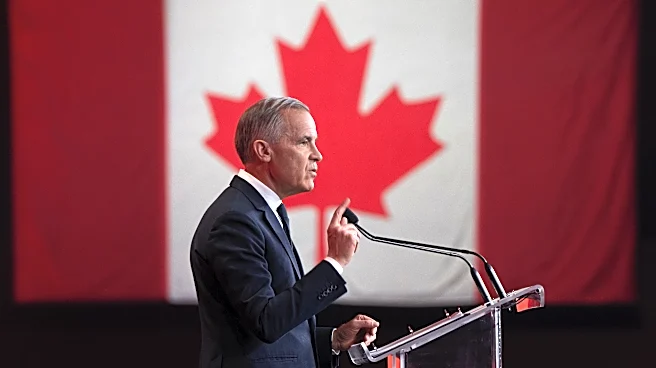
Canadian Prime Minister Mark Carney has achieved a majority government following victories in three special elections. Carney's Liberal Party now holds 174 of the 343 seats in the House of Commons, eliminating the need for support from opposition parties
to pass legislation. This marks the first time in Canadian history that a government has transitioned from a minority to a majority between national elections. Carney's rise to power was fueled by public discontent over President Trump's annexation threats, and he has since focused on reducing Canada's reliance on the U.S.
Why It's Important?
Carney's majority government allows him to implement his agenda without opposition interference, potentially leading to significant policy changes. His approach to international relations, including condemning economic coercion by great powers, has garnered praise and may influence Canada's foreign policy. Carney's leadership style, which has shifted the Liberals to the center-right, could reshape Canadian politics and its relationship with the U.S., especially given his efforts to form new alliances and trade pacts.
What's Next?
With a majority government, Carney is positioned to advance his legislative agenda, focusing on strengthening Canada's international alliances and economic independence. His government may pursue new trade agreements and investments, potentially altering Canada's global standing. The political landscape in Canada could see further shifts as Carney consolidates power and navigates relations with the U.S. and other countries.