
What's Happening?
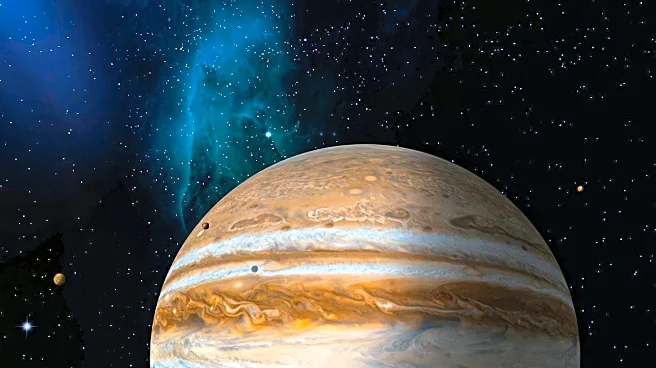
Jupiter, the largest planet in the solar system, is currently positioned in the constellation Gemini, providing a bright and steady point of reference in the night sky. Throughout February and into March, Jupiter can be seen between the stars Castor and Pollux,
outshining them both. Unlike stars, Jupiter's light does not twinkle due to its proximity to Earth, making it easily distinguishable. This celestial event offers stargazers an opportunity to observe Jupiter's gradual motion against the fixed stars, reflecting its orbit around the sun and Earth's motion.
Why It's Important?
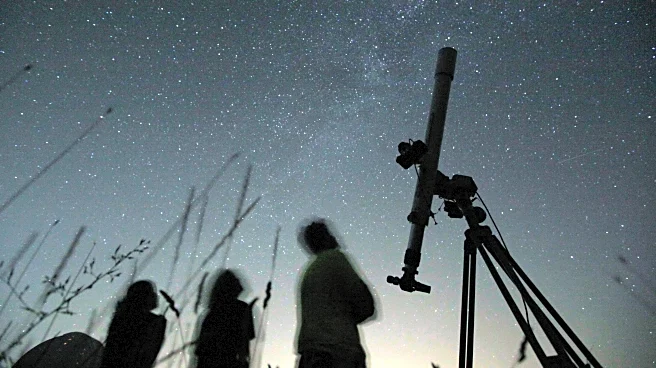
Jupiter's visibility in the night sky serves as a reminder of the dynamic nature of our solar system and the opportunities for amateur astronomers to engage with celestial phenomena. This event highlights the importance of astronomy in fostering public interest in science and the natural world. By observing Jupiter's movement, individuals can gain a deeper understanding of planetary motion and the mechanics of our solar system. Such events can inspire educational initiatives and community engagement in astronomy, promoting scientific literacy and curiosity.