
What's Happening?
Engineers in Denmark have developed a system to capture and reuse the vast amounts of waste heat generated by Artificial Intelligence (AI) data centers. This innovation comes as the rapid growth of AI data centers is exacerbating
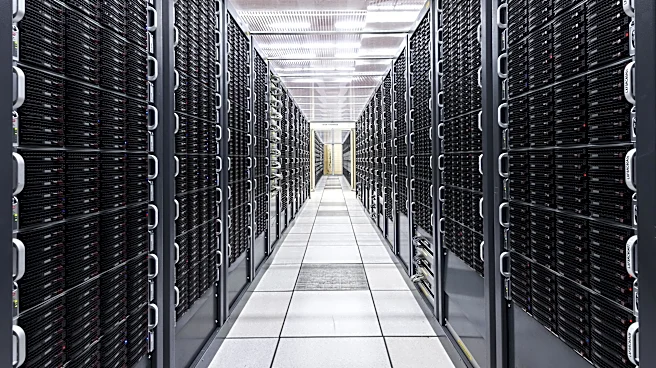
the global energy crisis. The International Energy Agency (IEA) reported that in 2024, data centers consumed 485 terawatt-hours of electricity, equivalent to 1.5% of the world's total energy supply, a figure projected to double to 3% by 2030, largely driven by AI development. The United Nations Economic Commission for Europe has warned that the expansion of AI hyperscalers like Google, Amazon, and Microsoft poses a significant threat to electricity systems worldwide. The new system, implemented at the Bitten supercomputer in the University of Southern Denmark, uses advanced liquid cooling technology from Danish engineering company Danfoss to pump coolant directly over high-temperature processing chips, absorbing waste heat. This heat is then channeled into Sonderborg’s municipal district heating network, providing warmth for the town's 75,000 residents. Kristian Strand, president of Danfoss Climate Solutions, highlighted that this technology not only heats homes but can also be used in industrial processes.
Why It's Important?
The ability to harness waste heat from AI data centers presents a significant opportunity to mitigate the growing energy demands and environmental impact of the technology sector. The U.S. hosts approximately 4,000 data centers, consuming 5% of the nation's electricity, yet recovers very little of their waste heat. Implementing similar systems in the U.S. could lead to substantial energy savings and reduced reliance on fossil fuels, contributing to energy independence and lower carbon emissions. Professor Jan Rosenow of the University of Oxford emphasizes the need to build data centers where their heat can be utilized, rather than solely based on land cost. This approach could transform data centers from energy guzzlers into energy sources, offering a sustainable model for technological expansion. The economic implications are also considerable, as businesses and municipalities could save significant sums on heating bills, as demonstrated by Sonderborg Hospital, which became energy independent for nine months of the year by capturing waste heat from medical equipment.
What's Next?
The success of waste heat recovery in Denmark suggests a potential blueprint for other nations, including the U.S., to adopt similar strategies. As the AI boom continues, the scalability of this technology could help address soaring energy demand globally. There is a growing call for data centers to be strategically located where their waste heat can be effectively integrated into existing district heating networks or industrial processes. This shift would require collaboration between technology companies, energy providers, and urban planners. Further research and development in waste heat recovery systems, alongside policy incentives for their adoption, could accelerate their implementation. The focus will likely be on expanding these solutions to other sources of industrial waste heat, such as supermarket refrigeration systems and wastewater treatment plants, to maximize energy efficiency and reduce carbon footprints across various sectors.
Beyond the Headlines
The development of waste heat recovery systems for AI data centers highlights a broader paradigm shift towards circular economy principles in energy management. Instead of viewing heat as a byproduct to be dissipated, it is now recognized as a valuable resource. This approach challenges traditional notions of industrial efficiency and encourages a more integrated urban planning model where energy infrastructure is designed to maximize resource utilization. The ethical dimension of AI's environmental footprint is also brought to the forefront, prompting a reevaluation of how technological advancements can be pursued responsibly. The potential for data centers to become integral components of sustainable urban energy systems could redefine their role in society, moving beyond mere computational hubs to active contributors to local energy grids and climate resilience.