







What's Happening?
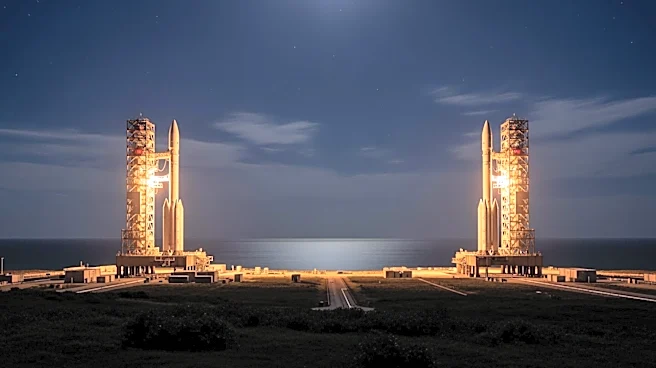
Two significant rocket launches are scheduled to take place from Cape Canaveral, Florida, on Monday. SpaceX is set to launch a Falcon Heavy rocket in the morning, which will carry a Boeing-built Viasat broadband satellite into geosynchronous transfer
orbit. This launch aims to enhance connectivity in the Asia-Pacific region. The Falcon Heavy, known for its power, is expected to produce a sonic boom. Later in the evening, United Launch Alliance (ULA) will launch an Atlas V rocket equipped with five solid rocket boosters. This mission will deploy the next batch of 29 Amazon Leo broadband satellites. Both launches are expected to be visible from various locations along Florida's Space Coast, weather permitting. The launches will occur from NASA's Kennedy Space Center and Cape Canaveral Space Force Station, offering a spectacle for residents and visitors in the area.
Why It's Important?
These launches underscore the growing role of Florida's Space Coast as a hub for space exploration and satellite deployment. The SpaceX mission will contribute to global internet connectivity, particularly in the Asia-Pacific region, which can have significant economic and social impacts. The ULA launch, part of Amazon's Leo satellite project, highlights the increasing competition and collaboration in the satellite internet market. These developments are crucial for advancing global communication infrastructure and demonstrate the strategic importance of space technology in modern society. The successful execution of these launches could bolster the reputation of both SpaceX and ULA, influencing future contracts and partnerships.
What's Next?
Following the launches, both SpaceX and ULA will likely focus on the deployment and operational success of the satellites. The performance of the Viasat satellite will be monitored to ensure it meets connectivity goals in the Asia-Pacific region. Similarly, the Amazon Leo satellites will be assessed for their contribution to Amazon's broader internet service ambitions. These missions may lead to further collaborations and technological advancements in satellite deployment. Additionally, the visibility of these launches could inspire public interest and support for space exploration initiatives.