








What's Happening?
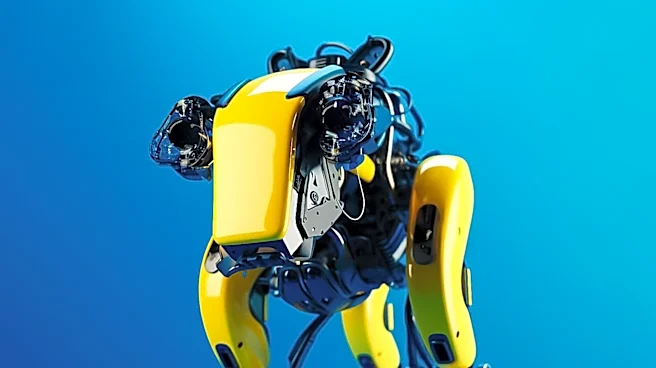
Boston Dynamics has brought its advanced humanoid robot, Atlas, and its quadruped robot, Spot, to the FIFA World Cup, showcasing their capabilities in both entertainment and security. Atlas has been programmed to perform complex soccer maneuvers, such
as the 'Ghost Rabona' kick, demonstrating the potential of reinforcement learning in robotic control. Meanwhile, Spot is being utilized for security operations at U.S. stadiums, equipped with high-definition cameras and thermal imaging to identify hazards and suspicious packages. This initiative is part of Hyundai Motor Co.'s expanded partnership with the FIFA World Cup, highlighting the integration of robotics in large-scale events.
Why It's Important?
The deployment of Boston Dynamics' robots at the FIFA World Cup signifies a major step in integrating advanced robotics into public events, potentially transforming security and entertainment sectors. Atlas's ability to perform complex tasks through reinforcement learning showcases the potential for robots to undertake more dynamic roles in various industries. Spot's use in security operations demonstrates the growing trust in robotic assistance for public safety, which could lead to broader adoption in other high-security environments. This development could influence future investments in robotics, encouraging further innovation and application in diverse fields.
What's Next?
As Boston Dynamics continues to refine its robotic technologies, the company may explore additional applications for Atlas and Spot beyond the World Cup. The success of these robots in such a high-profile event could lead to increased interest from other industries, such as logistics, healthcare, and manufacturing, seeking to leverage robotic capabilities for efficiency and safety. Additionally, the public's exposure to these robots may drive further acceptance and integration of robotics into everyday life, potentially leading to new partnerships and collaborations across various sectors.
Beyond the Headlines
The use of robots like Atlas and Spot at the FIFA World Cup raises important questions about the future of human-robot interaction and the ethical implications of robotic integration in public spaces. As robots become more prevalent, considerations around privacy, security, and the potential displacement of human jobs will need to be addressed. Furthermore, the development of robots capable of performing complex tasks could lead to advancements in artificial intelligence, prompting discussions on the balance between human oversight and autonomous decision-making in robotic systems.