






What's Happening?
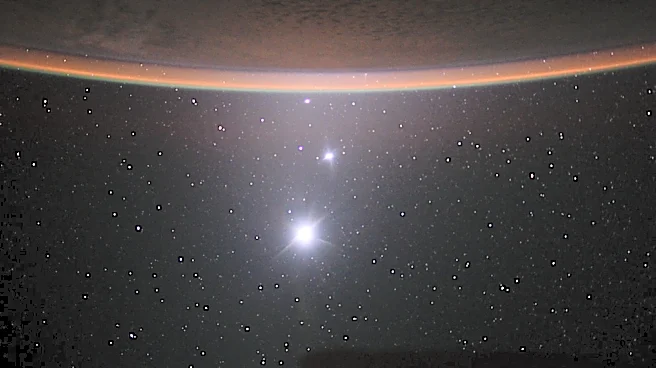
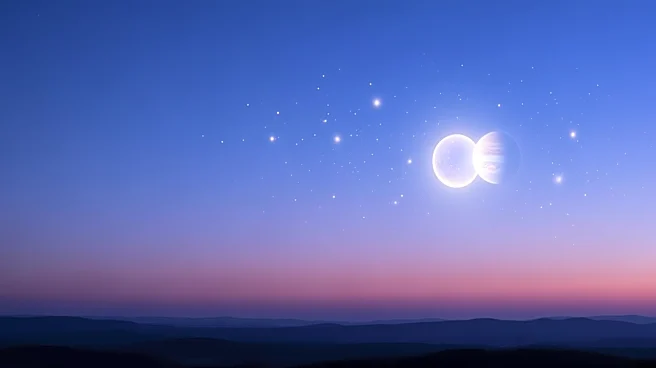
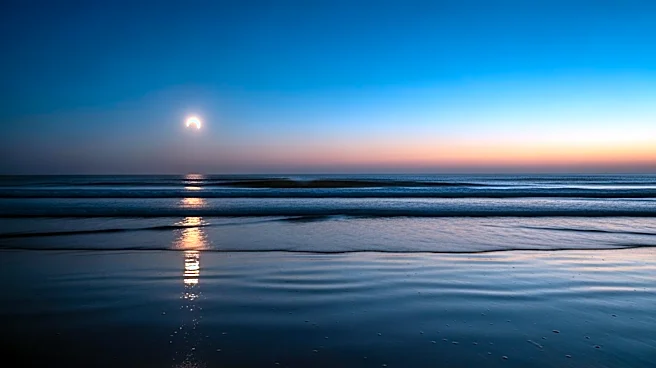
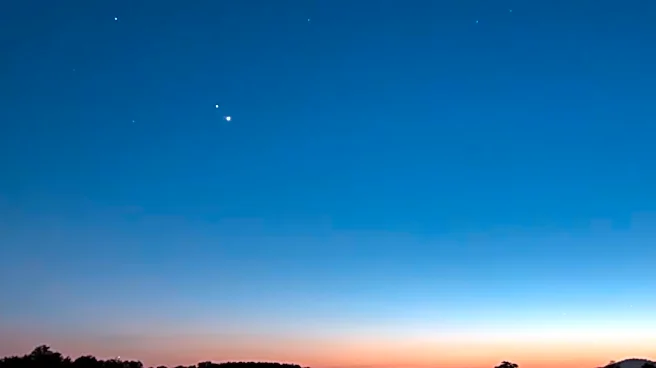
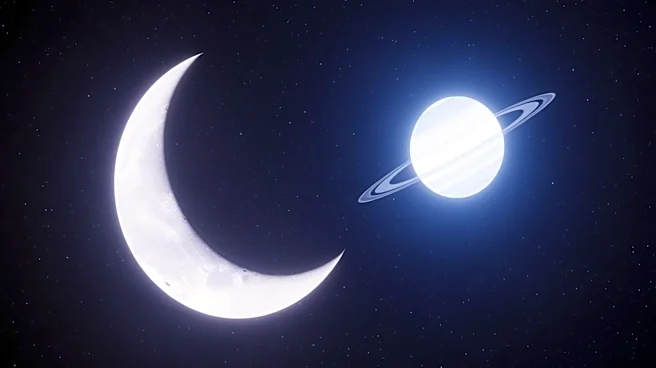
On June 10, the Moon and Saturn will share the constellation Pisces, creating a striking celestial event visible in the eastern sky before dawn. Saturn, the brightest point of light in this region, will be positioned close to the southern border of Pisces, glowing
at magnitude 0.8. This makes it easily visible even with the crescent Moon nearby. Mars will also be visible, located far to the pair's lower left, glowing at magnitude 1.3. For those with telescopes, Saturn's rings will be a highlight, stretching 38 arcseconds from end to end and tilted 8.5 degrees to our line of sight. Additionally, Saturn's largest moon, Titan, will be visible southwest of the planet, along with fainter moons Tethys, Rhea, and Dione. The constellation Cetus, with its brighter stars like Beta Ceti, will also be part of the view, although some stars may be obscured by the brightening sky.
Why It's Important?
This celestial event provides an opportunity for both amateur and professional astronomers to observe and study the alignment of the Moon and Saturn, as well as other celestial bodies like Mars and Saturn's moons. Such events are significant for educational purposes, offering a chance to engage the public in astronomy and increase awareness of the night sky. For the scientific community, these alignments can provide data for ongoing research into planetary movements and characteristics. The visibility of Saturn's rings and moons can also enhance understanding of the planet's structure and composition. This event underscores the importance of preserving dark skies for astronomical observation, highlighting the impact of light pollution on such activities.
What's Next?
Following this event, astronomers and sky enthusiasts will continue to monitor the movements of celestial bodies, with future alignments and conjunctions offering additional opportunities for observation. The ongoing study of Saturn and its moons will contribute to a deeper understanding of the planet's dynamics and its place in the solar system. Public interest generated by such events may lead to increased participation in astronomy clubs and educational programs, fostering a greater appreciation for space science. Additionally, efforts to combat light pollution may gain momentum as more people recognize the value of clear night skies for both scientific and recreational purposes.