





What's Happening?
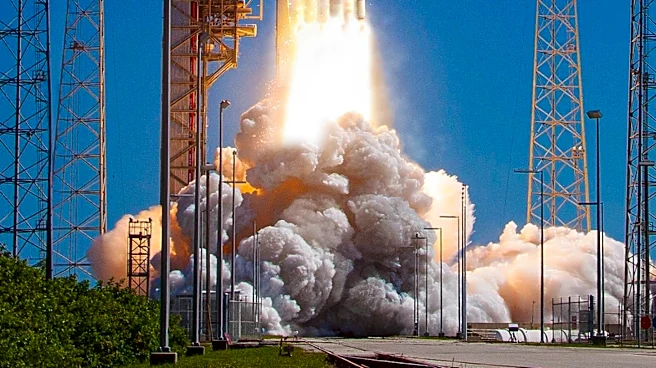
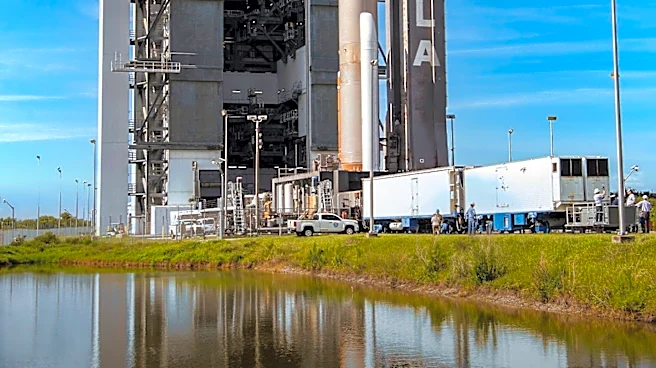
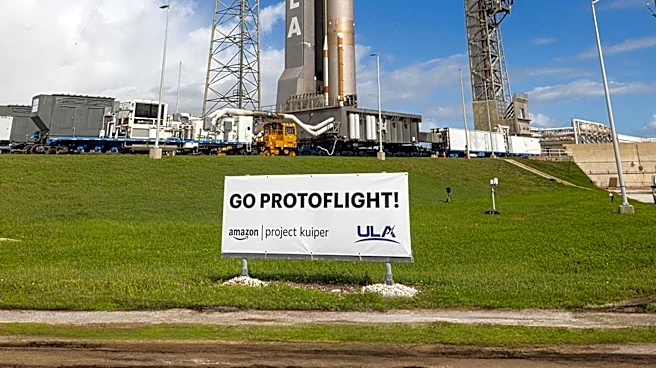
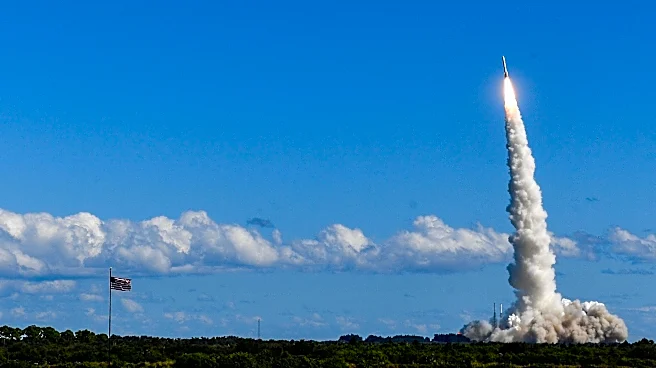
United Launch Alliance's (ULA) heavy-lift Vulcan rocket experienced a mission failure on Sunday, just ten minutes into its flight, while attempting to deploy 40 Amazon Leo satellites into space. This incident follows a period where ULA had already sidelined
the Vulcan for national security missions in February due to a booster problem. Preliminary investigations suggest the failure was caused by an inadequate fuel supply, rather than an engine malfunction. This mishap comes as SpaceX, another key U.S. launch provider, plans to reduce its use of the Falcon 9 rocket, which has been a workhorse for both the space industry and U.S. military operations, in favor of its super-heavy-lift Starship. The failure of ULA's Vulcan not only impacts the Space Force but also Amazon's emerging space-based internet service, which partially relies on these rockets.
Why It's Important?
The failure of ULA's Vulcan rocket has significant implications for U.S. national security and the commercial space industry. The U.S. military and the growing commercial space sector depend on multiple reliable rocket providers for critical missions. With only two companies, ULA and SpaceX, currently flying National Security Space Launch missions, ULA's setback, coupled with SpaceX's shift towards Starship, creates uncertainty. Experts like Todd Harrison of the American Enterprise Institute describe the situation as a 'real mess,' questioning how long it will take for ULA to regain certification for sensitive national security payloads. Furthermore, Blue Origin, a potential third provider, has also faced delays with its New Glenn rocket. This confluence of issues exacerbates a projected shortfall of approximately 150 medium- and heavy-lift rocket launches through 2030, with 2028 identified as the 'most acute year of the launch crisis,' according to Quilty Space.
What's Next?
ULA has stated it is investigating the cause of the Vulcan failure and acknowledges the impact on its customers. The Space Force has expressed its support for ULA in conducting a rigorous, data-driven analysis of the incident, emphasizing its strategy of securing a variety of providers to mitigate risks to national security. While the Space Force remains confident that its providers will be able to launch national security missions in the coming months, the timeline for Vulcan's return to flight and recertification for sensitive payloads remains unclear. The broader challenge involves addressing the projected launch capacity constraints, which may lead commercial satellite companies and startups to book rockets that have not yet flown or even develop their own launch capabilities, potentially introducing further delays given historical trends of new providers missing inaugural launch targets.
Beyond the Headlines
The Vulcan failure highlights a deeper vulnerability within the U.S. space launch ecosystem, underscoring the delicate balance between innovation, reliability, and national security. The reliance on a limited number of providers, each facing their own developmental challenges, creates a precarious situation where a single mission failure can have cascading effects across military, commercial, and scientific endeavors. The shift by SpaceX towards Starship, while promising for future capabilities, also introduces a period of transition and potential instability for existing launch needs. This situation could prompt a re-evaluation of U.S. space policy, potentially encouraging greater diversification of launch capabilities or increased investment in new, reliable providers to ensure consistent access to space for critical national assets and commercial ventures.