







What's Happening?
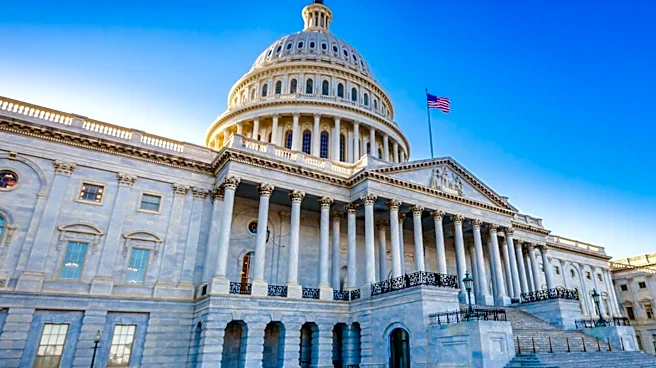
Congressman Mike Ezell (MS-04), who serves as Chairman of the House Transportation and Infrastructure Subcommittee on Coast Guard and Maritime Transportation and Vice Chairman of the Natural Resources Subcommittee on Water, Wildlife and Fisheries, has
introduced new legislation. This bill aims to modernize the Marine Mammal Protection Act (MMPA) of 1972. The primary goals are to enhance regulatory certainty and ensure that federal permitting decisions are based on the most accurate scientific data available. The proposed legislation seeks to update requirements for the incidental take of marine mammals during lawful activities such as maritime operations and infrastructure development in coastal waters. Key provisions include redefining 'harassment' to focus on actual injury or disturbance, establishing clearer scientific standards for 'negligible impact,' and streamlining incidental take authorizations. It also aims to improve mitigation and monitoring requirements and prevent unnecessary project disruptions by ensuring conditions do not alter the basic design or scope of lawful activities. The bill emphasizes relying on objective scientific and commercial data for federal determinations.
Why It's Important?
This legislative effort is significant for both environmental protection and economic development, particularly in coastal regions like the Mississippi Gulf Coast. The current MMPA, while crucial for marine mammal conservation, has been cited as creating regulatory hurdles that can delay or complicate essential maritime construction, port improvements, and offshore operations. By clarifying regulatory standards and streamlining the permitting process, the bill intends to reduce bureaucratic delays, which can save time and resources for industries vital to coastal economies. This could support American jobs and strengthen the maritime industry by allowing critical projects to proceed more efficiently. The legislation also seeks to balance these economic interests with robust environmental protections, ensuring that marine resources are managed responsibly while federal regulations are grounded in sound science. The support from entities like the Mississippi Department of Marine Resources and EnerGeo Alliance highlights the perceived need for a more predictable regulatory framework that benefits both conservation efforts and industrial activities.
What's Next?
The proposed legislation will now proceed through the congressional process, likely involving committee hearings and potential amendments. Stakeholders, including environmental groups, maritime industries, and government agencies, will closely monitor its progress and may offer further input. If passed, the modernized MMPA could lead to significant changes in how federal agencies evaluate and permit activities affecting marine mammals, potentially altering project timelines and operational costs for businesses in coastal areas. The bill's emphasis on clearer scientific standards and streamlined authorizations suggests a future where development projects might face fewer regulatory uncertainties, while still being held accountable for minimizing impacts on marine life. The outcome will depend on legislative consensus and the ability to reconcile differing views on environmental protection and economic growth.
Beyond the Headlines
Beyond the immediate regulatory changes, this legislation touches upon the broader societal challenge of balancing economic progress with environmental stewardship. The debate over the MMPA's modernization reflects ongoing tensions between industrial needs and conservation imperatives. By seeking to refine definitions like 'harassment' and 'negligible impact,' the bill could set new precedents for how human activities are assessed in relation to wildlife. This could influence future environmental legislation and regulatory approaches across various sectors. The focus on 'sound science' and 'objective application' also highlights a push for evidence-based policymaking, potentially reducing subjective interpretations in environmental impact assessments. This could lead to a more consistent and transparent regulatory environment, fostering greater predictability for businesses while aiming to maintain effective protections for marine mammal populations. The long-term implications could include shifts in how coastal communities and industries interact with their marine environments, potentially leading to more integrated approaches to resource management.