




What's Happening?
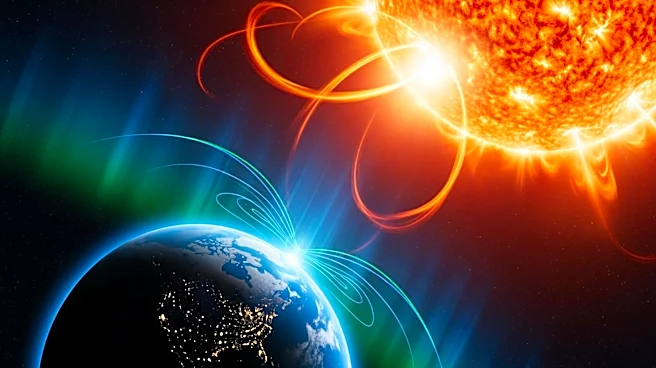
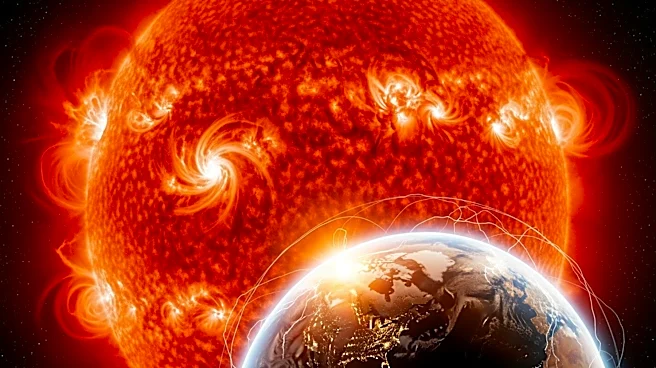
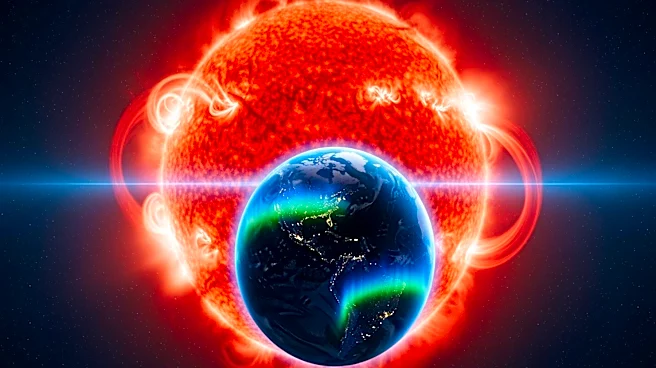
A rare 'cannibal' solar storm is heading towards Earth, formed by the merging of two coronal mass ejections (CMEs) from the sun. This phenomenon began on June 2 when sunspot 4455, an unstable region on the sun's surface, became increasingly volatile,
triggering a series of powerful X-class solar flares. The faster CME overtook a slower one, creating a 'cannibal' CME, which is a dense, highly energized shockwave. According to NASA, these complex ejecta can carry significantly more energy than standard solar outbursts, potentially leading to intense geomagnetic storms when they strike Earth's magnetic field. The U.S. National Oceanic and Atmospheric Administration (NOAA) has issued a watch for a strong G3 geomagnetic storm, with the possibility of escalating to a severe G4 event. The storm is expected to reach Earth late on June 4 or early June 5.
Why It's Important?
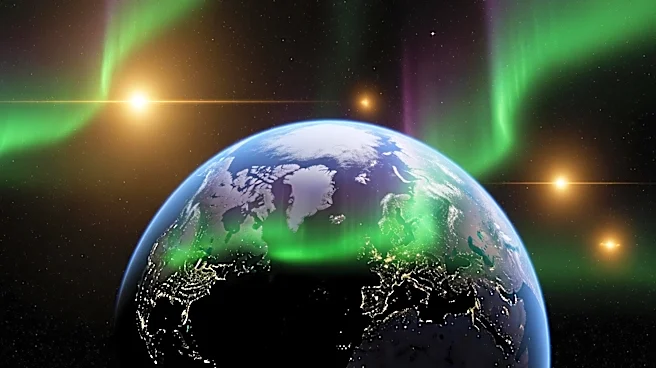
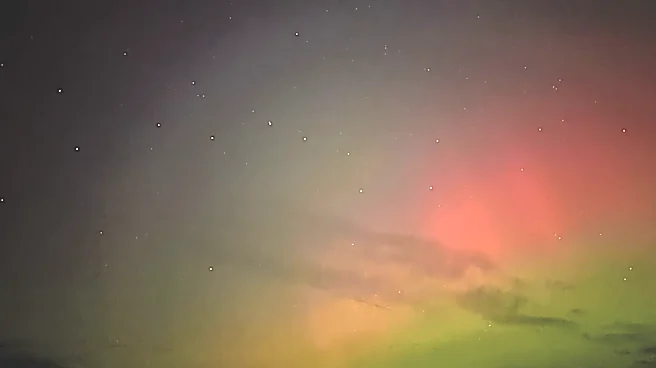
The impending solar storm could have significant implications for both natural phenomena and technological systems. The increased solar activity is expected to produce especially brilliant auroras, visible much farther south than usual, offering a rare opportunity for millions to witness the Northern Lights. However, the storm also poses potential risks to technology, including brief radio blackouts and increased atmospheric drag on satellites. While the geomagnetic storm is not expected to harm individuals or ground-based infrastructure, it highlights the vulnerability of modern technology to solar events. Understanding and predicting such solar activities are crucial for mitigating their impacts on communication systems, navigation, and satellite operations.
What's Next?
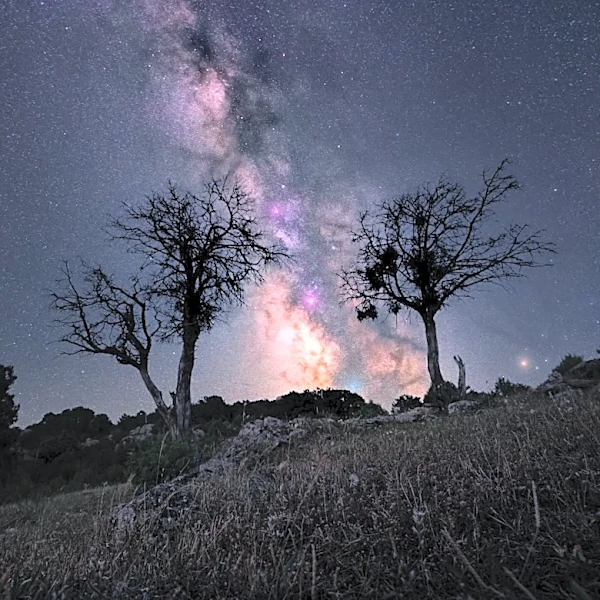
As the solar storm approaches, forecasters and researchers will continue to monitor its development and potential impacts. Individuals interested in viewing the auroras are advised to seek dark areas away from city lights and stay updated with local aurora forecasts. Meanwhile, satellite operators and communication networks may take precautionary measures to minimize disruptions. The event underscores the importance of ongoing research and monitoring of solar activities to better predict and prepare for future occurrences.