




What's Happening?
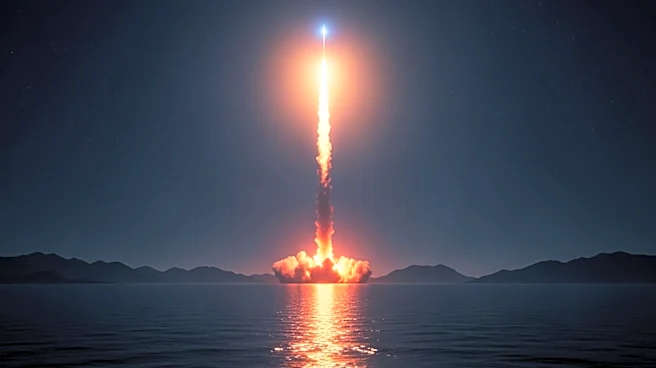
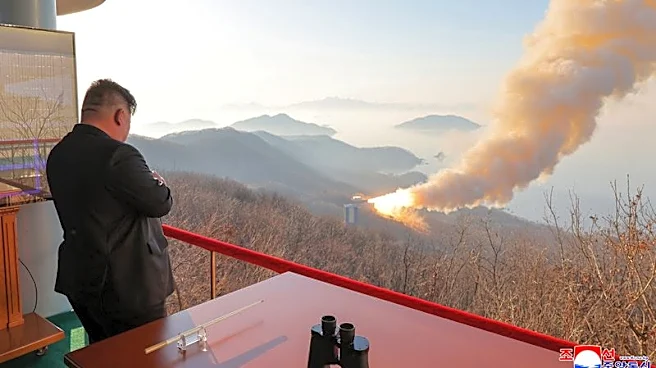
North Korea has launched multiple ballistic missiles towards the sea, as confirmed by South Korea's Joint Chiefs of Staff. The launches occurred from the Sinpo area on North Korea's east coast and have been detected by Japan's Defense Ministry. The missiles are believed
to have landed in waters off North Korea's coast, prompting strong protests from Tokyo. These actions violate U.N. Security Council resolutions that prohibit North Korea from conducting ballistic missile activities. The launches are part of North Korea's ongoing efforts to expand its nuclear capabilities, as stated by leader Kim Jong Un, who has emphasized the limitless expansion of the country's nuclear forces.
Why It's Important?
The missile launches by North Korea represent a significant escalation in regional tensions and pose a threat to international peace and security. The actions defy international norms and challenge the authority of the U.N. Security Council. North Korea's continued development of its nuclear arsenal could destabilize the region and provoke a military response from neighboring countries. The situation highlights the difficulties in curbing North Korea's nuclear ambitions and the limitations of diplomatic efforts to engage the regime. The international community faces a complex challenge in addressing the threat posed by North Korea's nuclear program while maintaining regional stability.
What's Next?
In response to the missile launches, South Korea has increased its surveillance and is coordinating closely with the United States and Japan. An emergency meeting of South Korea's National Security Council is planned to discuss the situation. The international community may consider additional sanctions or diplomatic measures to address North Korea's actions. The situation remains tense, with potential implications for regional security and international relations. The ongoing developments will likely influence future diplomatic efforts and the global approach to nuclear non-proliferation.