









What's Happening?
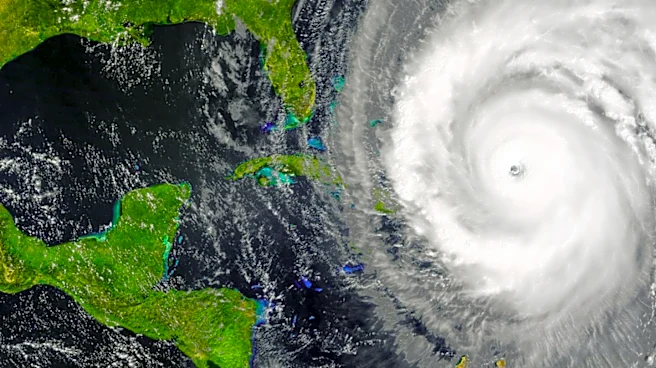
The Times Picayune, a U.S. newspaper, adopted the unofficial motto "We publish come hell and high water" after its newsroom staff continued reporting through Hurricane Katrina in 2005. This motto signifies the newspaper's commitment to delivering news despite
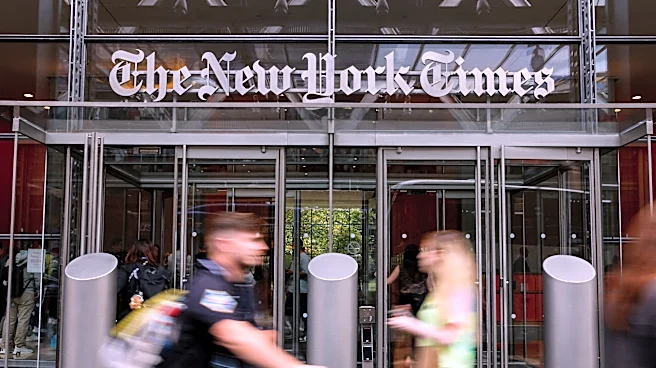
extreme challenges. The source highlights various newspaper slogans, including the New York Times' "All the news that’s fit to print," added in 1896 by owner Adolph S. Ochs, and the Washington Post’s "Democracy dies in darkness," introduced in February 2017. The article also mentions The Astorian's Latin motto, "speculum verum communis," meaning "the true mirror of the community," which has been central to its identity for over 150 years. These mottos underscore the diverse philosophies and historical contexts of American journalism.
Why It's Important?
The Times Picayune's motto is a powerful symbol of journalistic resilience and dedication, particularly in the face of natural disasters. It highlights the critical role local news organizations play in providing essential information and maintaining community cohesion during crises. This commitment ensures that the public remains informed, even when infrastructure is compromised. The broader discussion of newspaper slogans in the U.S. reflects the evolving mission and values of journalism, from Ochs's emphasis on factual reporting to the Washington Post's focus on democratic accountability. These mottos serve as guiding principles for newsrooms and communicate their core purpose to readers, influencing public trust and engagement with media.
What's Next?
The continued use of such mottos by newspapers like The Times Picayune and The Astorian suggests an ongoing commitment to their stated principles. In an era of rapidly changing media consumption and increasing skepticism towards news, these foundational statements may become even more crucial for establishing credibility and relevance. News organizations will likely continue to emphasize their unique value propositions, whether through resilience in reporting, dedication to local communities, or upholding democratic ideals. The evolution of these mottos, as seen with the Washington Post's recent adoption, indicates that newspapers will adapt their messaging to resonate with contemporary audiences and challenges, while still striving to fulfill their core journalistic duties.
Beyond the Headlines
The adoption of mottos like "We publish come hell and high water" delves into the ethical and cultural dimensions of journalism. It speaks to a profound sense of public service and the inherent risks journalists often undertake to inform society. This commitment goes beyond mere business operations, touching upon the moral imperative of truth-telling and community support. In a broader sense, these slogans contribute to the collective identity of the press, shaping public perception of its role in a democratic society. They also highlight the historical continuity of journalistic values, even as the industry navigates technological shifts and economic pressures, reinforcing the idea that some core principles remain immutable.