
What's Happening?
A deadly fire at Le Constellation bar in Crans-Montana, Switzerland, on New Year's Day 2026, has drawn comparisons to the 2003 Station nightclub fire in Rhode Island, USA. Both incidents involved indoor
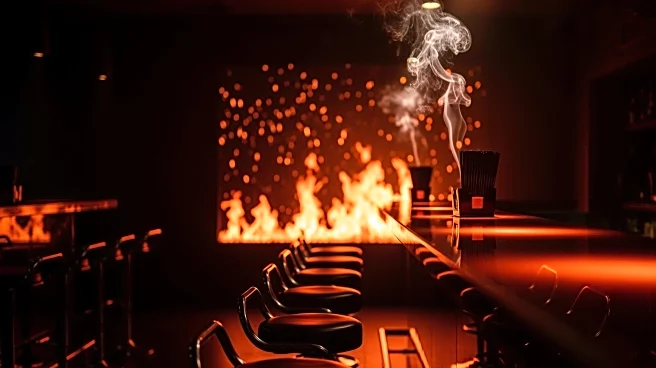
pyrotechnics that ignited acoustic foam panels, leading to rapid 'flashover' fires. The Swiss fire resulted in 40 fatalities, while the Rhode Island fire claimed 100 lives. Survivors from both events suffered severe burns. Experts, including UK fire investigation consultant Richard Hagger, have noted the similarities, emphasizing the role of non-fire-retardant foam in spreading the fires. The Swiss authorities are investigating the incident, which reportedly began when sparklers attached to champagne bottles ignited the ceiling. The bar had not undergone safety checks for five years.
Why It's Important?
The recurrence of such fires underscores the need for stringent safety regulations and awareness of fire hazards in public venues. The Swiss fire, like its Rhode Island predecessor, highlights the dangers of using pyrotechnics indoors and the critical importance of fire-retardant materials. These incidents reveal gaps in safety protocols and the potential for similar tragedies if lessons are not learned and applied globally. The impact is significant for public safety policies, as it calls for international cooperation in establishing and enforcing fire safety standards to prevent future disasters.
What's Next?
The ongoing investigation by Swiss authorities may lead to stricter safety regulations for public venues, particularly concerning the use of pyrotechnics and the materials used in construction. There could be increased pressure on international bodies to develop and enforce a global fire safety code. The findings from this investigation might influence policy changes in other countries, aiming to prevent similar tragedies. Public awareness campaigns about fire safety and emergency response could also be initiated to educate the public on how to react in such situations.
Beyond the Headlines
The psychological impact on survivors and the families of victims is profound, with long-term effects on mental health and well-being. The incidents also raise ethical questions about the responsibility of venue owners and event organizers in ensuring safety. The cultural practice of using pyrotechnics in celebrations may come under scrutiny, prompting a shift towards safer alternatives. Additionally, the role of media in shaping public perception and response to such disasters could be examined, particularly in how it influences policy and public behavior.